ATM Skimmer

An ATM skimmer is a card reader that is installed on some ATMs by criminals in order to steal the card numbers and PINs of the victims who use them. ATM skimmers vary in sophistication, but may be installed either directly within an ATM or next to it and may either interfere with the ATM’s regular functions or simply trick the victim into swiping his/her card. ATM skimming has been performed since the 1990s, but has recently become much more popular due to smaller computers and other advanced technologies.


How ATM Skimmers Work

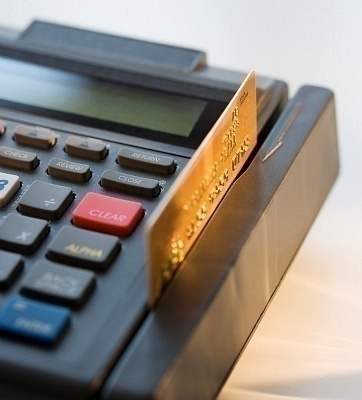
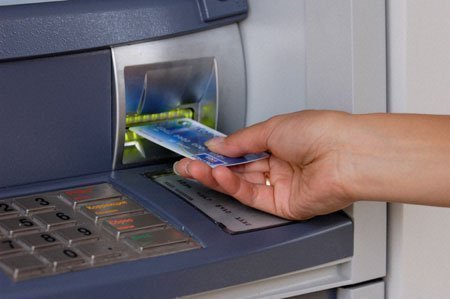
An ATM skimmer can either be installed directly within an ATM or next to it and is used to read a victim’s credit/debit card as he/she swipes it. ATM skimmers are made in the same way that ATM card readers are designed, with a raised swiping device that is able to read the magnetic strip on a user’s card and a computer that is able to store and/or process the information. While an ATM is designed to access the user’s account and dispense a specified amount of money, an ATM skimmer will either record the victim’s information and state that the machine has malfunctioned or record the victim’s information and then forward the transaction to the ATM’s real processor.


Applications

ATM skimming is explicitly used to obtain a victim’s credit/debit card number and, in some cases, PIN number. However, ATM skimmers may be used on any ATM, whether it is owned by a bank or a store, as well as any card reader in general, whether it is located at a doctor’s office, convenience store, grocery store, or even a flea market. To avoid credit card theft, credit/debit card users should avoid using any ATM or card reader that looks suspicious.
 

ATM Skimmer ATM Skimmer

VN:F [1.9.17_1161]
Rating: 0.0/10 (0 votes cast)
Follow Will.Spencer on

Comments (2)


  1. renegate says:

    I SELL SMALLEST BLUETOOTH ATM HEAD READER WITH BLUETOOTH RECEIVER. CHEAP! IF YOU ARE INTERESTED PLEASE CONTACT ME AT:  tmsr206 [at] aol.com

    VA:F [1.9.17_1161]
    Rating: 0.0/5 (0 votes cast)
    • Manoj says:

      What is the use of it?? i really dont know i lyk to learn plz reply

      VA:F [1.9.17_1161]
      Rating: 0.0/5 (0 votes cast)

Leave a Reply

Related Posts

  • Shoulder Surfing

    Shoulder surfing is a security attack that is implemented by observing a victim as he/she enters a PIN, fills out a form, or performs another activity that exposes their confidential information. A shoulder surfer may observe a victim by looking over their shoulder, taking pictures, or using binoculars from a distance. For example, credit card [...]...


  • RFID Skimmer

    Radio-Frequency Identifier (RFID) technology has become really popular because of the various advantages it comes with. However,   such as passports, national identity cards, credit cards etc have become a serious security concern. Two electrical engineering students (Ilan Kirschenbaum and Avishai Wool) from Tel Aviv University wrote a paper titled "How to Build a Low-Cost, [...]...


  • Test Credit Card Numbers

    A test credit card number is the card number of a fake live credit account provided by a credit card company in order for retailers to verify that their card readers are working properly and that they are compatible with a specific credit card brand. Test credit card numbers are read like real credit card [...]...


  • Defenses to ID Theft

    Identity theft occurs when an individual or group of individuals steals one’s identity in order to commit theft or fraud. The most common types of identity theft is when a person steals personal or financial information to either steal money from an already established credit card or bank account or open up a new loan [...]...


  • Mondex Smart Card

    Mondex is a specific smart card which was developed by England’s National Westminster Bank in 1990. Its design was intended to serve as electronic cash or a virtual electronic wallet. Any amount of money can be transferred to the Mondex smart card. MasterCard international bought controlling interest in the resulting firm, Mondex International, in 1997 [...]...