Monitoring DNS with the DNS Console
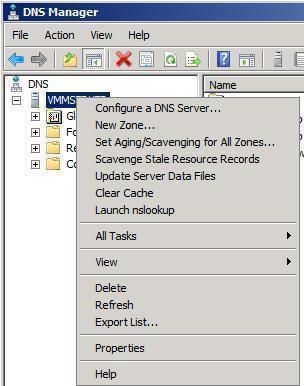
The DNS management console includes functionality that enables you to use the console to monitor DNS activity:
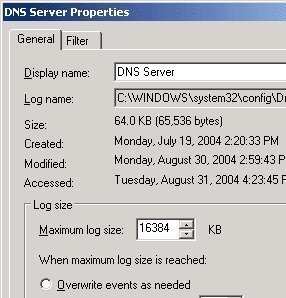
Event Logging tab: You can access the Event Logging tab located within the Properties dialog box of the DNS server to specify the DNS events that you want to monitor. Through the Event Logging tab, you can limit the events which are written to the DNS Events log.
Monitoring tab: The Monitoring tab is also located within the Properties
[ read more ]
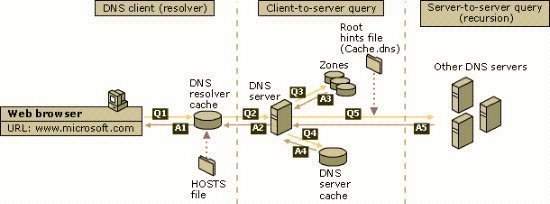
DNS Queries Overview
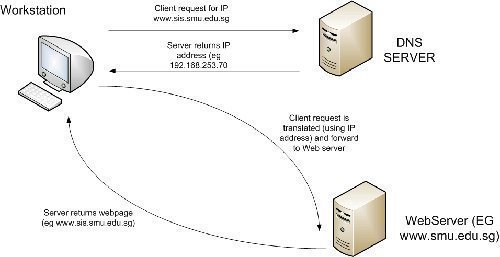
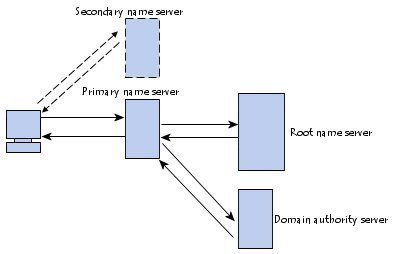
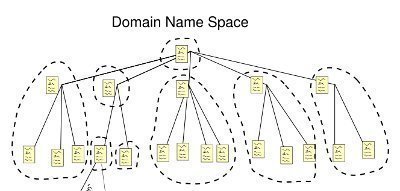
The naming system used by DNS is a hierarchical namespace, called the DNS namespace. The DNS namespace has a unique root. The root can contain numerous subdomains. Each subdomain also can contain multiple subdomains. Each domain registered in DNS is connected to a DNS name server. The DNS server of a domain provides authoritative replies to queries for that particular domain.
The DNS server manages the DNS database that resides on it. DNS server is authoritative for the co
[ read more ]
Installing the DNS Server Service
There are a number of methods which you can use to install the DNS server service on your Windows server.
Install the DNS server service on a stand-alone computer using the Add or Remove Program applet of Control Panel.
Install DNS when you install the first domain controller for an Active Directory domain.
Install DNS on an existing domain controller in an Active Directory domain.
Before installing the DNS server service, it is recommended that y
[ read more ]
An Overview of the Domain Renaming Feature
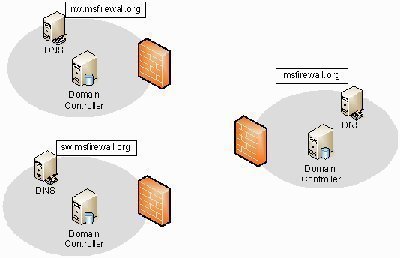
With the Windows NT 4 domain model, you had to completely rebuild an existing domain if you wanted to change the names of any of your existing domains. In Windows 2000 domains, you also have to create a new domain but the Active Directory Object Manager can be used to migrate existing users, groups and computers into the new domain. The Active Directory Object Manager plays a vital role in moving the contents of existing Windows 2000 domains into new d
[ read more ]
DNS is the primary name registration and resolution service in Windows 2000 and Windows Server 2003. It provides a hierarchically distributed and scalable database, name registration, name resolution and service location for Windows 2000 and Windows Server 2003 clients, and locates domain controllers for logon. A DNS server is a computer running the DNS Server service that provides domain name services. The DNS server manages the DNS database that is located on it. The information in the DNS ser
[ read more ]
A Domain Name Server (DNS) is a computer that uses networking software in order to save a database of network IP addresses and domain names for other Internet hosts. A DNS helps client computers use the web more efficiently by storing previous address look-ups, which allows them to surf the Internet faster. Older Windows Servers used the Windows Internet Name Service (WINS) for name resolution on the local network. It is recommended that a DNS Server be installed with the Windows 2008 server in
[ read more ]
Configuring DNS Client Settings
Configuring DNS client computers typically entail the execution of the following administrative tasks:
Setting the client computer names for each computer. The computer names that you configure should not be greater than 63 bytes. The name can only include:
Uppercase letters; A - Z
Lowercase letters; a - z
Numbers; 0 - 9
Hyphens
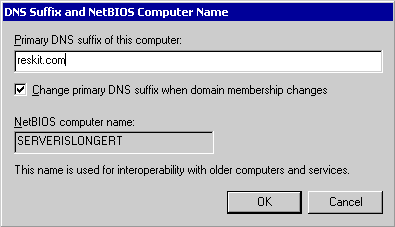
Configure a primary DNS suffix for the computer. The prim
[ read more ]
DNS Zones Overview
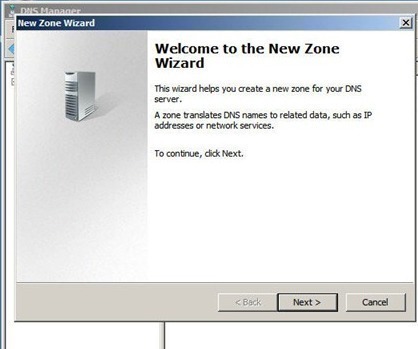
A DNS zone is the contiguous portion of the DNS domain name space over which a DNS server has authority. A zone is a portion of a namespace. It is not a domain. A domain is a branch of the DNS namespace. A DNS zone can contain one or more contiguous domains. A DNS server can be authoritative for multiple DNS zones. A non-contiguous namespace cannot be a DNS zone.
A zone contains the resource records for all of the names within the particular zone. Zone files are used if DN
[ read more ]
DNS Server and DNS Server Roles Overview
Before DNS, HOSTS files were used to resolve host names to IP addresses. The HOSTS files were manually maintained by administrators. The HOSTS file was located on a centrally administered server on the Internet. Because of the shortcomings of the HOSTS files, DNS was designed and introduced. From the days of Windows NT Server 4.0, DNS has been included with the operating system. DNS is a hierarchically distributed and scalable database. DNS provides name
[ read more ]
Domain Name System (DNS) is the primary name registration and resolution service used in Windows Server 2003. DNS provides a hierarchically distributed and scalable database; provides name registration and name resolution services, and service location for Windows 2000 and Windows Server 2003 clients; and locates domain controllers for logon. A DNS server is a computer running the DNS Server service that provides these domain name services.
The common threats to DNS servers are:
Denial-of
[ read more ]