An Overview on Secure Sockets Layer (SSL)
The Secure Sockets Layer (SSL) protocol was developed by Netscape Communications, and enables secure communication over the Internet. SSL works at the transport layer of Transmission Control Protocol/Internet Protocol (TCP/IP), which makes the protocol independent of the application layer protocol functioning on top of it. SSL is an open standard protocol and is supported by a range of both servers and clients.
SSL can be utilized for the following:
[ read more ]
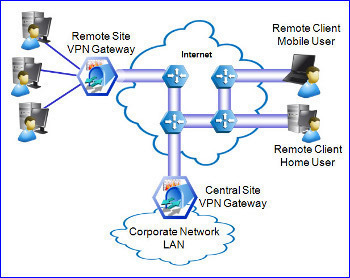
Virtual Private Networks (VPNs) enable users to connect to a remote private network through the Internet. Virtual private networks therefore span the Internet because the user connects over the Internet to the remote VPN server. With a VPN, data is first encrypted and encapsulated before it is sent to the remote VPN server. When the VPN server obtains the data, it decrypts the packet so that is can be interpreted.
VPNs are usually implemented to:
Enable remote access users to connect to a
[ read more ]
Understanding the Limitations of IPv4Before moving on the to an in-depth discussion of IPv6, lets first look at the limitations of IPv4:The IPv4 addresses are somewhat scarce, even though it allows for 4,294,967,296 possible addresses. Because of this limitation, organizations are forced to utilize Network Address Translator (NAT) to map a public IP address to several private IP addresses. NAT typically creates performance and application bottlenecks. The increase in devices that are connected
[ read more ]
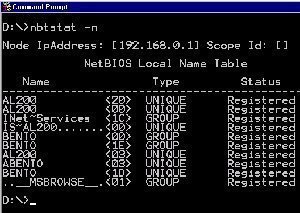
A NetBIOS node type is a method that a computer uses to resolve a NetBIOS name into an IP address. A NetBIOS node type allows an administrator to configure the order and method that a client uses when resolving NetBIOS names to IP addresses.
Understanding how the various node types function will help users to properly configure their WINS solution. Windows Server supports the following node types:
B-node (broadcast): it uses broadcasts for name resolution and registration. In a large netw
[ read more ]
NetBEUI (NetBIOS Extended User Interface) is a program used for communication between applications installed on separate computers within the same LAN (Local Area Network). It is an upgraded version of NetBIOS and provides much more flexibility and functionality by rearranging the information in a data transmission. Like NetBIOS, NetBEUI is not a networking protocol and must be used in conjunction with IPE or TCP/IP in order to operate.
How NetBEUI Works
NetBEUI assigns a name to each appl
[ read more ]
A protocol is a collection of specifications or rules for data packets that enable information to be sent over the network. Network protocols are designed for network communication. In order to understand the different protocols available and their efficiencies, lets first look at the Open Systems Interconnection (OSI) reference model. This is the standard model for network communication developed by International Organization for Standardization (ISO). The design of the OSI model is that of a s
[ read more ]
Remote Access Connection Manager is a program installed on all Windows Operating System versions that controls all dial-up Internet and Virtual Private Network (VPN) connections. Though access to the Internet depends on a number of factors and applications, Remote Access Connection Manager runs all of the required software necessary to connect to a remote device or network. As a result, Remote Access Connection Manager will not function properly if any of its required services is disabled. Likew
[ read more ]
NWLink Overview
NWLink IPX/SPX is the Microsoft implementation of Novell's NetWare Internetwork Packet Exchange/Sequenced Packet Exchange (IPX/SPX) protocol. NWLink IPX/SPX is simply called NWLink. NWLink is used in Novell NetWare, and can be considered IPX for Windows. NWLink is an IPX/SPX compatible transport protocol that was developed to enable Windows 2000 computers to communicate with NetWare services. It is therefore used when clients running Microsoft operating systems (OSs) need to acc
[ read more ]
An Overview on the Public Key Infrastructure (PKI)
A set of components, standards, and protocols make up the Public Key Infrastructure (PKI), which protects data as it is transmitted over the network. The PKI is an integral aspect of security within a network. Digital certificates form the basis of the PKI because these certificates use cryptographic algorithms and key lengths to protect data as it is transmitted over the network.
The more important components of the PKI are summarized bel
[ read more ]
Microsoft Model Overview
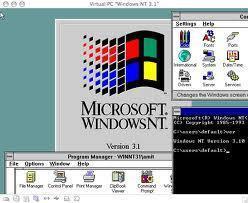
Before Windows NT 3.1 was released, users had to obtain the TCP/IP protocol suite from a third party, and then install it. This was necessary for users to connect to the network, which in turn usually resulted in a number of issues. When it came to network communication, the TCP/IP software which was obtained and installed often functioned differently to that of the particular operating system.
With the release of Windows NT 3.1, TCP/IP was included as a component of t
[ read more ]