Home     Blog

What is a Nuclear Time Unit?

What is a Nuclear Time Unit?

The Nuclear Time Unit (NTU) measures how much time it takes for a light ray traveling in a vacuum to travel the diameter of a hydrogen atom. In order to calculate a single NTU, divide the diameter of a hydrogen atom (approximately 1.06 x 10^-10 meters by the speed of light in a vacuum or free space (3 x 10^8 m/sec) which is 3.53 x 10 ^ -19 sec. What is the Atomic Clock? The atomic clock is known as the most accurate in the world. It uses electronic transition frequency that occurs in the atom'

[ read more ]

Large Hadron Collider

Large Hadron Collider

The Large Hadron Collider, abbreviated as LHC, is an energy particle accelerator or collider instrument. It is the world’s biggest instrument used by scientists to study and examine the smallest identified particles; which are the primary building blocks of everything. The Large Hadron Collider is a worldwide project with UK playing the major part. This project will transform humans understanding about the microscopic world packed with atoms, the elementary laws of physics and the darkest secr

[ read more ]

How a Nuclear Bomb Works

How a Nuclear Bomb Works

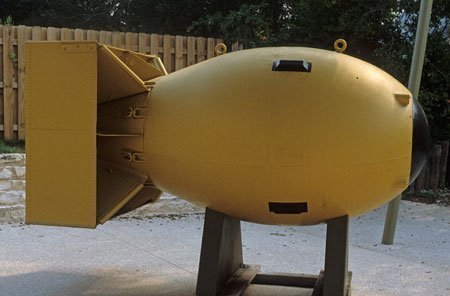
A nuclear bomb uses a nuclear reaction to generate energy (heat and radiated particles). The energy released is millions or in some cases billions of time stronger than TNT; the whole process is carried out in a very short time, providing huge destructive power. There are two types of nuclear reactions, fission and fusion. During fission the nucleus are broken apart and in fusion, they collapse one toward the other. Extremely heavy elements as uranium and plutonium are used in fission bombs and

[ read more ]

What Causes Radioactivity?

What Causes Radioactivity?

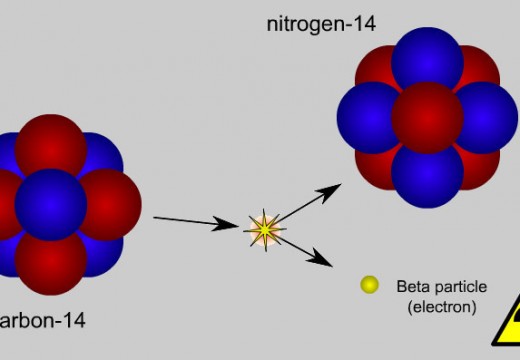
Radioactivity is caused when an atom, for whatever reason, wants to give away some of its energy. It does this because it wants to shift from an unstable configuration to a more stable configuration. The energy that is released when the atom makes this shift is known as radioactivity. In other words, radioactivity is the act in which an atom releases radiation suddenly and spontaneously. What are the Types of Radioactivity? There are four specific types of radioactivity. In three of the four i

[ read more ]

Particle Detector

Particle Detector

Most particle detectors are used in applied particle physics, nuclear physics, and nuclear engineering. Most particle detectors measure the momentum, spin, charge, etc. of high energy particles. This is integral to the study of the particles, their sources, and any observable actions. Particle detectors can be very large and can produce a wide range of results depending on their main mode of application. Very large particle detectors, such as the Compact Muon Solenoid, is a general purpose de

[ read more ]

Shielding Effect

Shielding Effect

The shielding effect refers to an atomic phenomenon that causes electrons further out from an atom’s nucleus to experience less attraction than electrons closer to the nucleus due to the effects of other electrons. Because of this, atoms tend to align their electrons in order of attraction, with the electrons that experience the most attraction closer to the nucleus and electrons that experience the least attraction further from the nucleus.   How the Shielding Effect Works An at

[ read more ]

What is Interferometry?

What is Interferometry?

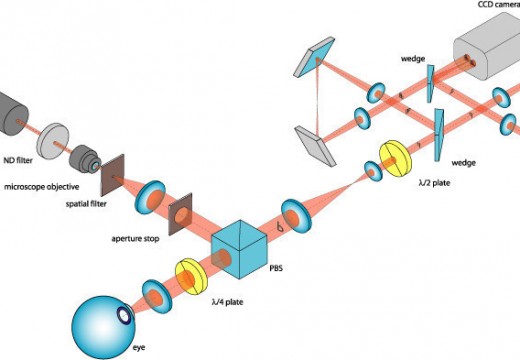
Interferometry is a series of techniques that uses a series of superimposed electromagnetic waves to extract data and other insights regarding the waves. The device used to measure the waves is an interferometer. Interferometry is primarily used in the fields of fiber optics, engineering metrology, optical metrology, seismology, oceanography, astronomy, particle and nuclear physics, quantum mechanics, bio-molecular interactions, and remote sensing. How does Interferometry Work? Interferometry

[ read more ]

Cold Fusion

Cold Fusion

Cold fusion refers to fusion reactions that occur at room temperature under normal pressure, using ordinary, simple devices. Fusion Fusion happens when two atomic nuclei come together to form a new, heavier nuclei. This is not easily accomplished because of a basic scientific principle: oppositely charged particles attract while similarly-charged particles repel each other. Since atomic nuclei (as in hydrogen protons) are similar-charged particles, their natural tendency is to repel each other

[ read more ]

How Nuclear Fusion Works

How Nuclear Fusion Works

Nuclear Fusion relates to nuclear power. So let us start with the process involved for getting nuclear power. There are, mainly, two processes involved: 1) Nuclear Fission Most of the present day nuclear power plants use this process to get power. This process uses a conventional method of splitting one atom into two. Here high-energy neutrons split heavy atoms of uranium. This results in release of huge amount of energy. However, this also releases large radioactive wastes and high radiation

[ read more ]

What is a Geiger Counter?

What is a Geiger Counter?

A geiger counter is a device that detects (esp. nuclear) radiation by conducting electricity when an ionized particle is present. While geiger counters are not the only devices that detect radiation, they are the most preferred option worldwide due to their portability and low cost. Geiger counters are most often used after environmental and industrial catastrophes that result in some form of radiation leaking into the atmosphere, a water supply, or the ground. How Geiger Counters Work Gei

[ read more ]