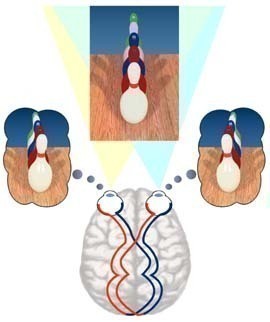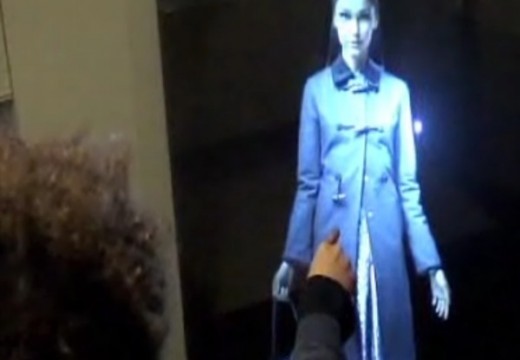
Holograms are three-dimensional images produced through photographic projection. Unlike 3-D graphics or Virtual Reality or Augmented reality displays where the image is projected in a two-dimensional surface and where the illusion of depth is applied, holograms are truly three-dimensional images that do not need special viewing equipments.
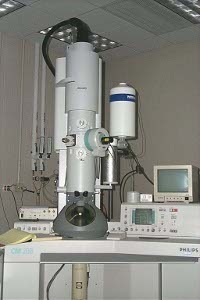
The first hologram was created in 1947 by Dennis Gabor while doing research on improving the resolution of electron microscopes. The lasers needed for displa
[ read more ]
A laser sight is a device that shoots a laser at a certain target. It is often used within many military applications, especially with guns. Basically, the laser sight is a visible laser light that allows the shooter to see where the bullet will hit. It is located (or structured to fit) above the body of the small arm at a precise angle facing down, so that the laser will point directly at the spot where the bullet will most likely hit. However, as with all devices, the laser is often slightly o
[ read more ]
Fiber optic lines, which can be as thin as a piece of human hair, are made of strands of glass that are optically pure. They are used to transmit light signals, and have the ability to carry these signals over long distances.
How is Light Transmitted Through Fiber Optics?
The process by which light is transmitted through fiber optics can best be described through the use of an analogy.
If you want to shine a light through a tunnel, you can do so by pointing a flashlight down the tunnel in a s
[ read more ]
As its name suggests very clearly, laser engraving is the art of engraving or marking objects using one or multiple lasers. Considering the preciseness that is required with the engraving, the whole process is quite complex and technical, which often requires a computer. Therefore, as desired, the final engravings are done extremely precise at a very high rate.
Most of the laser engraving done today is conducted by what is known as a laser engraving machine. This machine has three main parts to
[ read more ]
Lasers have revolutionized the way that many devices and machinery work. From CD players to machines that cut metal, lasers play an important part in many daily activities, right under the noses of unaware consumers. Lasers are used in dental drills, tattoo removal, hair replacement, eye surgery, and there is now even a method of using laser beams to create rain. While some lasers are harmless, others are extremely dangerous and not all lasers are the same. However, all lasers work in pretty muc
[ read more ]
Laser is the abbreviation of the term "light amplification by stimulated emission of radiation." It is an apparatus that emits a special form of light. The emission of light by a laser is known as stimulated emission.
The essential parts of a laser are a gain medium and an optical cavity. There should also be an external source of energy to be supplied to the gain medium. Gain medium is a material that has got the characteristics to amplify light. The gain medium in a laser can be a m
[ read more ]
A laser printer unlike an inkjet printer uses a laser light beam for printing operations. It is also distinct from other printers because of its exceptional printing speed as well as highly accurate rendering. It utilizes a xerographic (a process of creating an image by the action of light on a specifically coated charged plate) printing.
Some laser printers in the market can print a hundred colored pages and two hundred non-colored pages every minute.
Resolution is a key characteristic of las
[ read more ]
A Laser cutter is a machine that uses a laser to cut materials. The Laser Cutter works by making the laser enter through the side of the material that needs to be cut and shoots it through the axis of the beam. If a cut needs to be made and there are no edges near it, a small piercing is done before the cut. During a piercing, a high power concentrated pulse of laser beam slowly starts to make a hole, creating an edge to begin the laser cutting with.
Laser Cutter Configurations
When configurin
[ read more ]
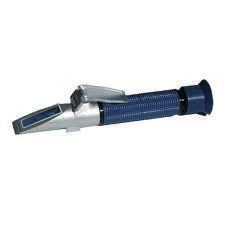
The index of refraction (refractive index) is a measurement of the speed of light in a medium compared to the speed of light in a vacuum. Since light travels at different speeds in different materials, it may change its direction. For example, the index of refraction for water is 1.33, meaning that light travels 1.33 times as fast in a vacuum as it does in water. This is why light bends when it comes in contact with the surface of water. Likewise, light travels at different speeds through materi
[ read more ]
The speed of light in MPH is 670,616,629 mph, 299,792,458 meters per second, or 186, 282 miles per second. Light takes approximately one second to travel the 238,854 miles to the moon. The speed of light is considered a physical constant that is used in many areas of physics. This is because light always travels at this speed in space or in a vacuum regardless of the measurement source or observer. The most popular use of the speed of light is in Albert Einstein's theory of relativity, E=mc^2, w
[ read more ]