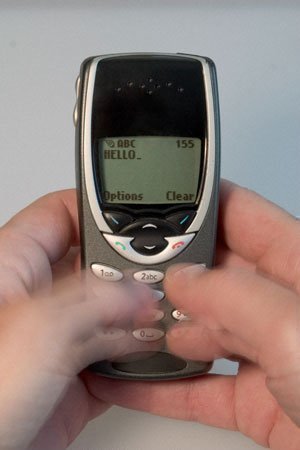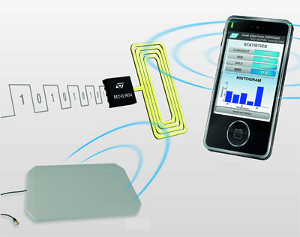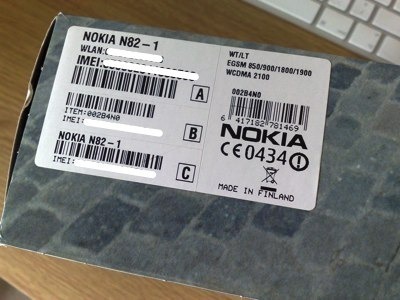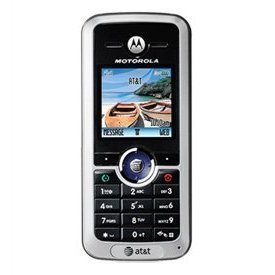
With practically everyone owning a mobile phone and spending a considerable amount of time on them each day, it is wise to ask the question: Are mobile phones dangerous to one's health? While there are no conclusive answers at the moment, there are conflicting studies. Some show that mobile phones are safe and others show that mobile phones may pose a health risk.
Mobile phones may be considered potentially dangerous in a few ways. First, they send and receive high frequency radio waves. Seco
[ read more ]
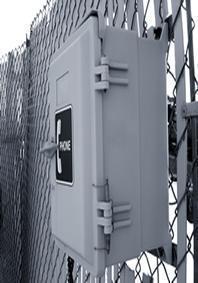
The telephone Network Interface Device (NID) is what connects your home telephone lines to the telephone company's network. It is usually a small gray box located on the exterior of your home. It usually contains a modular phone plug that you can use for testing the line. They need both inside testing and outside testing. In some older installations, you may not have a NID. Instead, you will find a "protector block", a small plastic covered box where the cable coming out of your house connects t
[ read more ]
A telecommunication audit is a assessment of an organizations telecommunication environment. The purposes of a telecommunication audit are to ensure:
Security
Policy compliance
Cost efficiency
Service effectiveness
Telecommunications support of business objectives
A proper telecommunication audit should include all types of telecommunications: voice, video, and data.
The audit should encompass all telecommunication equipment, services, policies, and expenses
[ read more ]
IVR (Interactive Voice Response) allows a computer to interpret the speech of a human being as input to the system. Similar to a touch tone system that listens to the unique sound of each button press a user makes, the IVR system analyzes the sound of the user speaking and converts the user's speech to a format it can interpret.
Like a traditional touch tone system, the user navigates the computer system by making menu selections or responding to requests for other, more complex input. Wit
[ read more ]
Forward and reverse channels refer to a number of frequencies that are used by a telecommunications broadcast system in order for a telephone tower and a cellular telephone to communicate with each other. A forward channel refers to the frequencies used by a telephone tower to communicate with all nearby cellular phones. Contrastingly, a reverse channel refers to the frequencies used by cellular telephones to communicate with a telephone tower.
How Forward and Reverse Channels Work
[ read more ]
Phone prefixes are the codes that tell the phone companies which state, city, or county a person is calling from. As more people move to an area the phone prefixes change and additional ones are added. Depending on the state, there may only be a few prefixes. Prefixes help to differentiate between each person's phone numbers and to organize all the numbers. They also list the names of all the people who have phones - including cell phones.
Landlines and Cell Phones
Prefixes also tell us w
[ read more ]
A VMB (Voice Mail Box) is a computer that acts as an answering machine for hundreds or thousands of users. Each user will have their own Voice Mail Box on the system. Each mail box will have a box number and a pass code.
Without a passcode, you will usually be able to leave messages to users on the VMB system. With a passcode, you can read messages and administer a mailbox. Often, mailboxes will exist that were created by default or are no longer used. These mailboxes may be taken over by gue
[ read more ]
A TIMSI, or Temporary International Mobile Subscriber Identity, number is a random number that is created from a telecommunications subscriber’s IMSI number in order to provide additional security. While an IMSI is unique to each subscriber and is a permanent number that can be used to track a subscriber or interfere with his/her services, a TIMSI is often re-negotiated by the telecommunications company the subscriber is associated with and can only be stolen if an eavesdropper intercepts the
[ read more ]
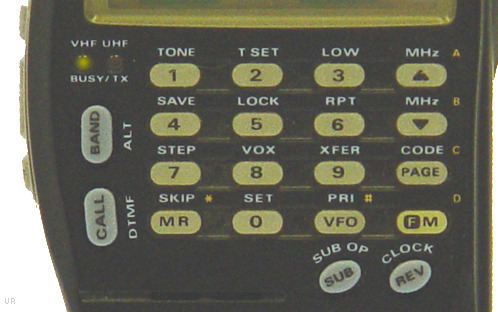
The ABCD tones are additional DTMF tones that may be used in any way the standard (0-9) tones are used. These tones are generated using a Silver Box.
Engineers envisioned phones being used to access computers and other devices. This vision led to the addition of the number sign (#, sometimes called 'octothorpe' or 'pound') and asterisk or "star" (*) keys as well as a group of keys for menu selection: A, B, C and D.
In the end, the lettered keys were dropped from most phones, and it was man
[ read more ]
BREW (Binary Runtime Environment for Wireless) is an application development platform for wireless phones. Qualcomm was the company to set up this standard and it should be noted that although it was used for CDMA cellular phones, today it can be used for GSM, GPRS and UMTS. Essentially BREW allows consumers to download and use applications on their mobile phones. These applications can include chat programs, email, location positioning, games, etc...
Developing Applications with BREW
Many dev
[ read more ]