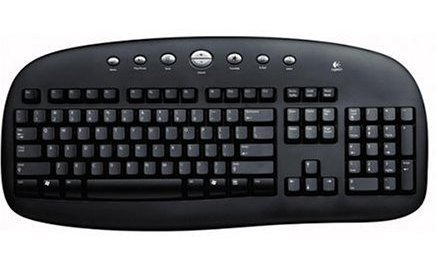
How a Wireless Mouse Works
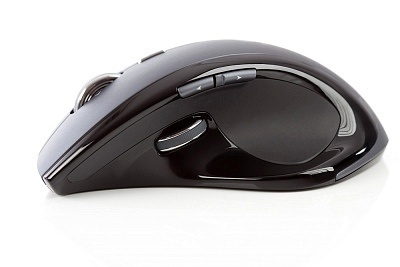
The mouse is an extremely popular device. While the majority of mice are connected directly to the computers peripheral input via a cord and the computer’s main power powers it, wireless mice are becoming extremely popular as they give computer users cordless accessibility to their mice and their computer.
Wireless Mouse Technology
Wireless mice usually work via radio frequencies commonly referred to as RF. RF wireless mice require two components to work properly – a radio transmitter and a radio receiver.
RF Transmitter
A radio frequency (RF) transmitter is usually integrated inside the mouse. The mouse records its movements and buttons that are clicked and then sends this information via radio signals to the receiver.
RF Receiver
The radio frequency (RF) receiver usually connects to the computer’s peripheral mouse input. It receives these RF signals, decodes them, and then sends these signals directly to the computer as normal. RF receivers usually come in a few styles. The majority come as built in components that connect to the mouse input, others come as a separate card that is installed in one of the many expansion slots of computers, and the third type of receiver is a separate unit that is connected to a cable going directly to the computer’s peripheral input. Since the technology has been mastered, most wireless mice have integrated receivers that plug into a computer’s peripheral input and are very small in size.
RF Frequencies
802.11b and 802.11g
Wireless mice mainly use Radio frequencies to transmit data from the mouse to the computer. The most common type of RF is the 802.11b or 802.11g. These frequencies operate at 2.4 gigahertz and at these frequencies a mouse can transfer data at very quick speeds, either 11 Mbps or 56 Mbps. 2.4 gigahertz frequencies. These frequencies are very stable and usually have little or no interference in a work or home environment. They also have a decent range of about 100 to 150 fee,t which is more than enough for mouse operation.
Bluetooth RF
Another technology that is emerging and is used in wireless mice is Bluetooth RF technology. Bluetooth is commonly known to connect computers to peripherals such as keyboards, printers, PDAs, and headsets. Bluetooth is similar to 802.11b and 802.11g in that it uses 2.4 gigahertz frequencies. However, it also uses software called adaptive frequency hopping to choose frequencies that have no or little interference. Sometimes 802.11b and g receive interference from home appliances such as microwave ovens and cordless telephones. Bluetooth also has decent range, usually about 33 feet.
Advantages of Wireless Mice
RF wireless mice are a great technology because of their overall reliability and stability. Other forms of communication such as Infrared technology need to be in “line of sight” in order to work properly, which makes using them with a mouse impractical.
Some of the reasons that RF technology is great for wireless mice includes the fact that the RF transmitter housed in the mouse requires low power. Usually, RF wireless mice are powered by small, light weight batteries that are either disposable or usually rechargeable with an included recharging dock.
RF wireless mice are also inexpensive. Wireless mice are available for less than $50 and even as low as $25. RF wireless mice are lightweight, so users can move them comfortable and easily.
As with most mice on the market today, wireless mice use optical sensor technology rather than the earlier track-ball system. Optical technology improves accuracy and lets the user use the wireless mouse on almost any surface – an important feature when not tied to the computer by a cord.
Three Types of Wireless Mice
Today, there are three different types of mice – mechanical, optical, and laser. Mechanical mice use a small rubber ball to calculate distance and position. However, these mice are very rarely manufactured due to the fact that they get dirty easily and are slow to process information.
Optical mice are the de facto standard for mice today. They use optical light to calculate distance and position. They are extremely inexpensive, extremely reliable, and process information quickly.
A new technology that is out is Laser Mice. Instead of optical light, they use laser light to precisely calculate movement and position. They are extremely precise and reliable and process information extremely quick. Most gamers use Laser Mice because of their high performance. However, they are much more expensive than optical mice.
Security and Mouse Set Up
Pairing
Pairing is the process of coordinating the mouse’s transmitter with its receiver. It requires both parts to operate on the same frequencies, usually by using the same identification code. Pairing takes place to try to eliminate interference. Some devices automatically pair both devices at start up, while others need to be manually paired.
Security
Security is always an issue when sending information over the air. Most mice effectively secure information by encrypting data. Other methods include frequency hopping to prevent hacking or eavesdropping.

Comments (19)
Leave a Reply
- How an Optical Mouse Works
Optical mice are the de facto standard for mice to communicate between the end user and the computer. The optical mouse is a great improvement of the mechanical mouse that was created in the early 1970s. Agilent Technologies introduced the Optical mouse in 1999. The technology uses a tiny camera that takes thousands of pictures [...]...
- How Wireless Power Induction Works
Wireless power induction is already being used today in the form of electric toothbrushes. An electric toothbrush contains coils or loops in the toothbrush handle as well as in the base recharging unit. Because of their constant exposure to water, electric toothbrushes have to use inductive coupling as a means of recharging their batteries. Inductive [...]...
- Wireless Modems
A wireless modem is a network device which connects to a wireless network. Modems are frequently associated with telephone systems, but wireless modems are used with computers to connect to the Internet. Connecting a wireless modem to the computer will directly connect to your wireless ISP (Internet Service Provider). Wireless modems operate at speeds comparable [...]...
- Wireless Routers
A wireless router is simply a router with a wireless interface that incorporates a wireless access point’s utilities. It is generally used to permit access to the Internet or a local computer network without using a wired connection. It can work in a cabled LAN (local area network), only wireless network, or a combination of [...]...
- How to Add a Printer to a Wireless Network
If you want to add a printer to a wireless network, you need to: 1) Ensure that the printer has at least one USB port. 2) Purchase a wireless adapter and connect it to the printer’s USB port. Since wireless adapters work on Plug-and-Play technology, the printer should automatically detect it and begin installing all [...]...


working can be detailly explained
please help me in knowing whether we can develop a touchsensor mouse
I have a 3d wireless optical mouse but I can’t operate it . please help me (JVC company, model-npz-8513)
is wireless mouse safe to use by pregnant women?
I don’t think so. It uses radio waves just as wireless internet and radio which are everywhere around us. If it presented any kind of a risk for pregnancies we would’ve probably known about it long ago.
Corded mice are grounded via a grounding wire (called: signal ground, or logical ground; GND is its acronym) that is combined with its signal/logical wires used for communicating with the computer. So I just assumed that if I wanted to earth/ground my physiology via a corded mouse, I need only imagine the existence of a mouse encased within a carbonized frame which is then connected to the grounding wire leading to the computer. Thus, every time my hand makes contact with the mouse, my body is earthed (electrically grounded). Earthing the physiology to take advantage of its health effects has already begun to be established experientially and scientifically (http://www.earthinginstitute.net/). But now, one of the co-authors of the book on earthing, Marty Zucker, has pointed out to me the flaw within my idea: that wireless mice won’t give me any benefit of grounding since there is no grounding connection between the mouse and the computer. Oops! Do you have any insights that might resolve my oversight other then restricting mouse usage to corded mice? Many thanks, in advance…
That’s interesting, though I’m somewhat skeptical about how crucial earthing is for humans given that we’ve been more or less without it for so long and have lived just fine. There are lots of things that might affect our health and not being earthed could at best be just one among many factors, and we might be able to compensate for it.
Cordless mice are without a wire so naturally they cannot be grounded themselves unless you run a wire from it to the ground source, but then you might as well just use a corded mouse. All I found by searching were anti-static wrist straps, but I’m not sure if that helps.
It might be one alternative to grounding though, if the whole issue is not being discharged of some sort of stress inducing electricity excess.. I didn’t read the book so I’m just guessing though.
I already use anti-static wrist straps whenever I am at a computer workstation (such as a public library) which does not have easy access to a three-pronged outlet (which I always test with an outlet checker; outlets at public buildings are sometimes hot — miswired!). I then connect the alligator clip on the other end of the anti-static wrist strap to some bare metal protruding from the backside of the computer’s chassis. Otherwise, I use the wrist band from http://www.earthing.com on my ankle and carry its connecting wire with me to plug into a properly grounded outlet.
I was attempting to increase user-friendly-earthing for computer users by attempting to improve ease of use beyond that of a grounded mouse pad which is currently under development by its inventor at http://www.earthinginstitute.net . I’m not meeting with much success at spreading my idea around for encouraging someone else to develop it. I guess demand is not great, and investment for research and development can be very high?
That guess would make sense. Earthing as an idea itself seems to be on the fringes in terms of popularity, not that this means it’s a bad one. Needless to say though, that would affect demand for such things..
Perhaps your best bet might be convincing an existing manufacturer to come up with a niche product of this kind to add to their existing line up. They just might have the funds to throw at this experimentally.
I’m really just guessing though, from the top of my head.
Good luck.
how do I turn on and off my wireless mouse or go enable the touchpad on my toshiba laptop?
Does the wireless mouse have a switch on it?
As for turning off your touchpad that depends on your laptop, but why turn it off? You can use a mouse without turning the trackpad off.
working can be explained in a detailed diagram
I have an h.p. wireless mouse I believe it is a laser one
it has a red light on the bottom of it my question is can I buy a replacement reciever seperately because I dont have one for it and if Ican WHERE and how much
I’m looking into adding wireless mice to my 24 pc lab.
Has there been any study or does anyone have comments on this?
How many are to many? Will that many affect one-another with the RF or enterfear with oneanother?
can I use a wireless mouse with a MacBook pro laptop?
how do I set it up?
Is there a program CD that goes along with the mouse when I buy it?
I have a new Radio Frequency 27 MHZ mouse, how can set up it?
I’m an older person (70+) used an optical unwired mause . Any minut after starting and holding my right palm and two fingers ofer the mause started a burntrought pane in palm and finger, get shvolen and along time I can’t straighten them. Please halp me1
I have a HP wireless keyboard and a wireless mouse installed when I bought my desktop HP Pavilion Slimline more than a year ago. Now my wireless mouse is not responding even after a change of new battery. What is the possible cause. How would I know that this mouse is faulted or not.