ECC Memory
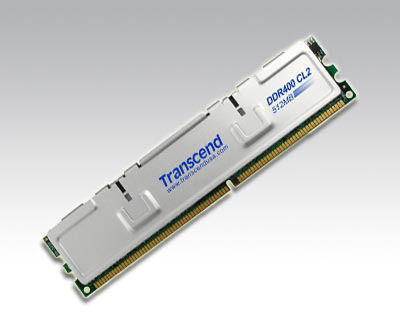
ECC (Error Correction Codes) is a method used to detect and correct errors introduced during data storage or transmission. Certain kinds of RAM chips inside a computer implement this technique to correct data errors and are known as ECC Memory.
ECC Memory chips are predominantly used in servers rather than in client computers. Memory errors are proportional to the amount of RAM in a computer as well as the duration of operation. Since servers typically contain several Gigabytes of RAM and are in operation 24 hours a day, the likelihood of errors cropping up in their memory chips is comparatively high, hence they require ECC Memory.
Memory errors are of two types, hard and soft. Fabrication defects in the memory chip cause hard errors, which cannot be corrected once they start appearing. On the other hand, electrical disturbances predominantly cause soft errors.
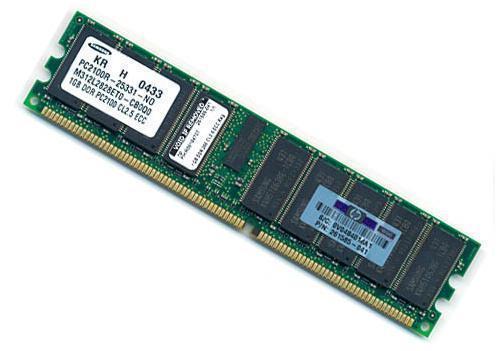
Memory errors that are not corrected immediately can eventually crash a computer. This has more relevance to a server than a client computer in an office or home environment. When a client crashes, it normally does not affect other computers even when it is connected to a network, but when a server crashes it brings the entire network down with it. Hence ECC memory is mandatory for servers but optional for clients unless they are used for mission critical applications.
ECC Memory chips mostly use Hamming Code or Triple Modular Redundancy as the method of error detection and correction. These are known as FEC (Forward Error Correction) codes that manage error correction on their own instead of going back and requesting the data source to resend the original data. These codes can correct single bit errors occurring in data. Multi-bit errors are very rare and do not pose much of a threat to memory systems.
- NVRAM (Non-Volatile Random Access Memory)
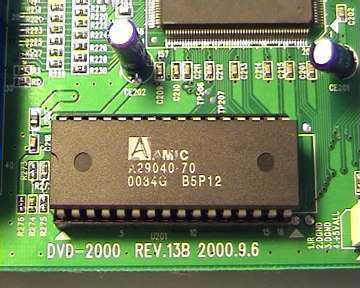
NVRAM is an acronym for Non-Volatile Random Access Memory. NVRAM is a type of Random Access Memory (RAM) that retains its information when power is turned off. The NVRAM is a small 24 pin DIP (Dual Inline Package) integrated circuit chip and is thus able to obtain the power needed to keep it running from [...]...
- Registered Memory
Registered memory modules have built-in registers on their address and control lines. A register is a very small temporary holding area (usually 64 bits) for data. These registers act as buffers between the CPU and the memory. The use of registered memory increases system reliability, but also slows the system down a very slight bit [...]...
- Device Driver has corrupted the executive memory pool
If you receive an error message which reads: Windows error "Device Driver has corrupted the executive memory pool., it basically means that there is a corruption with a driver somewhere on your system. This issue can occur when an attempt to touch invalid memory at a process IRQL that is too high occurs. This is [...]...
- Memory Stick
A Memory Stick is an IC (Integrated Circuit) which is stored in a compact and rugged plastic enclosure. Memory Sticks are designed to store data and to enable the transfer of data between devices equipped with Memory Stick slots. Normally, Memory Sticks are used as storage media for a portable device, in a form that [...]...
- PROM (Programmable Read Only Memory)
PROM stands for Programmable Read-Only Memory. It was invented by Wen Tsing Chow in 1956. Unlike a ROM chip, a PROM chip comes from the manufacturers devoid of any programming. Programming is done by the end user or the makers of electronic devices which require a permanent data storage device. Since it is cheaper than [...]...