

A diopter is a lens that bends light in order to magnify an object. Diopters can be used to enlarge small objects or see across far distances and are generally integrated into other objects in order to maximize efficiency and accessibility. A diopter can also refer to a measurement that describes a lens’s optical power and measures the maximum distance that a lens is capable of viewing an object from.
How Diopters Work
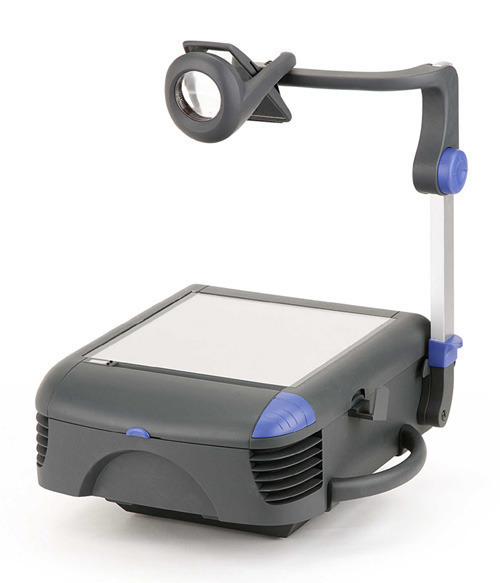
A diopter (lens) is a transparent piece of glass or plastic that bends light inward or outward in order to magnify or shrink the view of an object. There are three types of diopters: concave, convex, and compound. Concave diopters bend light outward so that the light is spread over a large area. They are used in projectors and inverse magnifying glasses. Convex diopters bend light inward so that light is focused on a much smaller area. They are used in binoculars, telescopes, eyeglasses, and regular magnifying glasses. Compound diopters are a combination of concave and convex diopters. They bend light in a number of ways, usually depending on adjustments the user makes. A rifle scope is an example of a compound diopter.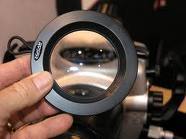
Applications
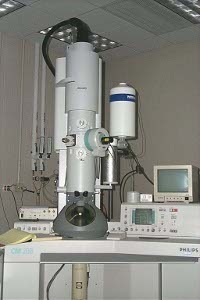
Diopters have many uses and can be seen on daily basis. For example, eyeglasses that correct nearsightedness or farsightedness are diopters. Likewise, magnifying glasses that magnify or shrink an object are also diopters. Other examples of diopters include rifle scopes, camera lenses, binoculars, microscopes, and telescopes.
Advantages
Diopters have several important advantages. For example, they bend light in order to maximize or restrict the view of an object. Because of this, diopters can be used to see objects up close or far away without the user changing his/her position. Diopters can be any size and can be used in the air, on the ground, underwater, and even in space.
Disadvantages
Although diopters are advantageous, they also have several disadvantages. For example, diopters are generally made of heavy glass that is vulnerable to breaking or becoming scratched. A diopter’s heavy weight makes it inconvenient for some applications and other tools must substitute it.
Pat Heuvel
A dioptre (or diopter) is not a lens, it is a unit of refractive power. According to wikipedia, it is the reciprocal of the focal length of a lens, where the focal length is in metres.