

A Virtual Autopsy or Virtopsy is a new and non-intrusive form of performing an human autopsy. This system utilizes a Computer Tomography or CT unit and an (MRI) Magnetic Resonance Imaging unit to obtain a detailed view of a body. Here the MRI images and the detailed X-rays are combined to create a full three-dimensional view of the body which medical examiners, coroners and pathologists can use to examine the state of the blood vessels, organs, bones and tissues of a body and thus determine the cause of death and the manner in which the patient died. Virtual autopsies can even bring to light some crucial information regarding the body that is difficult or time-consuming to acquire using conventional means.
Advantages of Virtual Autopsies
- Virtual Autopsies create digital and permanent records of the body, making it easier for forensic pathologists to communicate with each other. Real samples are hard to transport and share between pathologists, while the digital image of the body can be shared electronically among forensic pathologists and can be stored for future study.
- Forensic pathologists can conduct autopsies through the internet, freeing some hospitals from the need to retain or hire forensic pathologists of their own. This means that hospitals with CT and MRI units can take advantage of virtual autopsies even though they have no in-house forensic pathologists.
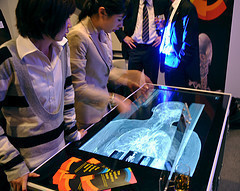
- The legal system will also benefit from this new technology as the three dimensional images can easily be shown in courtrooms and spare people from having to look at the traditional autopsies’ gruesome pictures of the victim’s body. The images from a virtual autopsy can also be made interactive, helping the judge and jury understand some technical facts.
- Although the equipment needed in performing virtual autopsies are very expensive, virtual autopsies will be a lot cheaper than conventional autopsies as the process involves fewer resources and is a lot easier to perform.
- A Virtual Autopsy leaves the body intact, so it would not add to the grief the victim’s family is feeling. This also overcomes the obstacles presented by religions that forbid cutting up cadavers.
Virtual Autopsy Background
The University Medical Center’s Institute of Diagnostic Radiology in Bern, Switzerland has already performed over a hundred virtual autopsies in the past three years. These virtual autopsies were followed by real autopsies and, so far, the results have matched.
In 1999 this technology was used to apprehend the murderer of a woman found floating in a river. Soon this technology can be used for some complex or time-consuming cases. For instance, it can be used to determine whether a baby has been shaken to death as it would be easier to study the blood ruptures behind the eyes. In cases of heart attack, it can detect damage to the heart muscles.
This technology can also be used to study blunt force trauma cases. A Virtual autopsy is also a good method in bioterrorism incidents as it lowers the risk of contaminating pathologists and other medical personnel.
Shahzad Khalil
modern way to do postmortem
xavier
do you know if south africa has a centre which offers virtual autopsy’s?