

Wireless power induction is already being used today in the form of electric toothbrushes. An electric toothbrush contains coils or loops in the toothbrush handle as well as in the base recharging unit. Because of their constant exposure to water, electric toothbrushes have to use inductive coupling as a means of recharging their batteries.
Inductive Coupling
Inductive coupling involves the use of magnetic fields to stimulate the movement of current through a wire. A current moving through a wire generates a magnetic field around it and vice versa. Thus, to generate a current through a wire, there needs to be a constantly changing magnetic field.
A current could also be induced in the wire by placing a second coil of wire within the magnetic field created by the first one. Thus, if the wire is formed into a coil, the magnetic field it produces is amplified by several degrees, making the magnetic field a lot bigger than if the electric wire was straight. The magnetic field could be further increased by using an electric wire not just to form a coil but to form a loop. The more loops there are, the greater the magnetic field will become.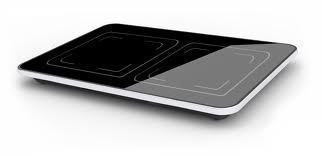
How It Works
An electric toothbrush recharges through three simple steps. First, a current from the wall outlet is directed into the charger and into the base coil via an electric wire. When the current flows through the base coil, the coil generates a magnetic field which in turn induces a current to flow to the coil in the toothbrush handle. This charges the toothbrush battery.
This is the same power transmission principle that is also used for other products such as the recharging mat and the Powerdesk. These products have built-in coils capable of inducing current flow in the coils of nearby devices that have compatible coils and the circuitry needed for power transfer.
Modern Wireless Power
Modern wireless power transmission was made possible because of the contributions of MIT researchers led by Marin Soljacic. This team has found a way around the limitations of Tesla’s theory on electromagnetic induction which was basically the short effective distance of the energy source in charging or powering another unit.
Magnetic fields propagate in all directions and decrease in strength proportional to the square of the distance away from the source. Thus, creating a more powerful field would only result to a decrease of energy efficiency. The researchers in MIT, however, found out that using the principles of magnetic resonance enabled them to effectively transfer power between coils several meters away from each other.
Resonance in terms of sound waves is defined as the frequency in which an object, given its shape and size naturally vibrates. In a wireless power transfer using coils, the resonant frequency is determined by multiplying the capacitance value of the plates attached to the ends of the coil and the inductance value of the coil. Using this set-up, the coil would resonate whenever a current passes through the coil.


Seamus
Good morning everybody,
I am trying to set up a project where i want to open my residential gate via motorised wheels. I propose powering the wheels via wireless power supply. Is there anyone out there who could help me with this project?
Very much appreciated,
Regards,
Seamus