

A generator (electrical) is a device that converts mechanical or chemical energy into electrical energy. Generators often use motors, turbines, engines, cranks, pistons, or other sources of mechanical energy. Likewise, generators may use chemicals or other materials that produce electricity when mixed or ignited. Generators do not produce electricity itself, but simply produce a flow of electricity by forcing electrons from an external source to flow through an electrical circuit. Generators are used for a wide variety of purposes and are available in many different forms.
How a Generator Works
Generators employ a wide assortment of external forces to produce an electric current, causing them to be very large. They are made to generate electricity for an entire building, city, or region. Water, wind, seismic activity, manual labor, magnetism, steam, compressed air, or gasoline, can power generators. However, gasoline generators are the most common for commercial and domestic applications. In any type of generator, a mechanical force is used to move a turbine or other rotary device in order to excite electrons and induce an electrical current in a circuit. The electricity is then directed through copper wires to power external machinery such as lighting systems or other electronic devices.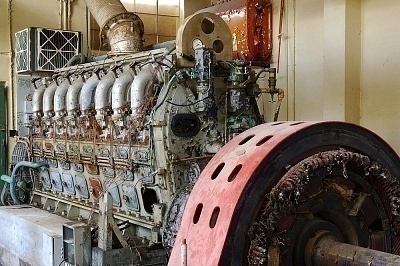
Applications
Electrical generators have many purposes and can be seen all over the world in a number of models. For example, generators are often used in hospitals, office buildings, and supermarkets to provide electricity to the entire building when power is interrupted. This is essential in these types of environments as vital electronic devices are dependent on a constant supply of electricity. Generators are also used in power plants to convert nuclear, mechanical, or chemical energy into electricity that electric companies distribute to an entire city or county. Domestic generators power basic household electrical devices, such as lighting systems and refrigerators, in times of distress until power can be restored. It is also important to note that the alternator found in every modern automobile is a form of electrical generator.
Advantages
Electrical generators have several important advantages. For example, generators can generate electricity for both long-term and short-term applications. Generators are also available in many different forms and sizes, making them accessible to virtually everyone. Dozens of different forces can power generators, making them extremely versatile. Likewise, generators can last for years before having to be repaired or replaced.
Disadvantages
Although electrical generators are advantageous, they also have a few disadvantages. For example, generators are often extremely expensive, although they are well worth it when needed. Generators are usually large and can be extremely heavy. They can also use large amounts of mechanical input and are not always efficient.


Follow Us!