

Anthracite coal is a form of coal that is almost made entirely of carbon. Anthracite coal is much harder than other forms of coal such as bituminous, and is usually found in areas surrounding mountains or deep valleys. Anthracite burns much cleaner than other forms of coal due to its low pollutant content. In fact, anthracite may contain 91% to 98% pure carbon, leaving only 2% to 9% of other elements. Anthracite coal is difficult to ignite and burns with a blue, smokeless flame.
Where does Anthracite Coal Come from?
Anthracite coal is a metamorphic rock and is found in areas where the Earth has had large amounts of movement and compression over long periods of time, such as mountain ranges. For example, most of the anthracite coal mined in the United States comes from the Appalachian Mountains in Northeastern Pennsylvania. Anthracite coal can also be found at volcano ridges and sometimes in areas where large earthquakes are common.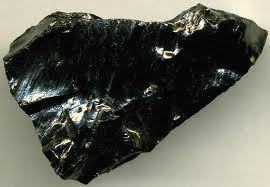
Applications
Anthracite coal is used in a variety of applications but is usually used for heating. Anthracite coal is the cleanest form of coal as it produces very little pollution and does not stain skin when touched, unlike most forms of coal. While anthracite coal is more difficult to burn, it produces more heat than other types of coal. Anthracite is most often used in domestic furnaces and fireplaces, although it is also used in some types of filters and is a common ingredient in charcoal. Anthracite is also used in steam-based power generators and can be converted into liquid in order to be used in internal combustion engines.
Advantages
Anthracite coal has several important advantages not only over other forms of coal, but over other energy producing materials in general. Its most important advantage is, of course, the fact that it produces very little pollution or soot, making it a very clean source of heat. Anthracite coal is also very efficient because only a small amount needs to be burnt to produce a large amount of energy. Additionally, there is a large supply of anthracite, over six billion tons in the Appalachian Mountains alone, with more reserves found in the Rocky Mountains and the Andes.
Disadvantages
Although anthracite coal has many advantages and has a variety of uses, it has several drawbacks. For example, anthracite coal is more expensive than other forms of coal due to its high quality. This is the primary reason that anthracite coal is not used in power plants or as a replacement to petroleum-based gasoline in automobiles. Anthracite coal is also more difficult to ignite than other forms of coal and requires a draft of air from beneath to catch fire. Despite this fact, however, anthracite coal is often the source of large underground fires that can burn for years or even decades and are often difficult to detect due to the lack of smoke.
Sherry Johnson
I would like to know if anthracite coal could be used for landscaping around my house like you would use 3 inch stone? If the answer is yes I would need 5 tons how and where can I purchase the anthracite coal. By the photo it appears to sparkle. I live in Brookville, Pa. 15825 Can you help me?
Chris Benson
This article is classic internet misinformation provided by writers who know little to nothing about coal or geology.
William
I was writing a report on Anthracite coal and this article helped me
Fred
“is usually found in areas surrounding mountains or deep valleys”. What rubbish .. have a look at the coal producing areas in Australia like the Bowen Basin and hunter valley where there is a complete lack of mountains and deep valleys.
Dileep Kumar
They said, “usually found” dude, not “only found”.
Rich
The article references “ANTHRACITE” coal, not bituminous. Australia has no Anthracite. Learn to read an article before you try to find fault with it and end up looking like an idiot.
hi
hello