

A decoupling capacitor (bypass capacitor) is a device that separates current and voltage levels from two separate sections of the same electronic device. Decoupling capacitors are useful in situations that require an electronic device to fluctuate current or voltage levels without straining the power supply. Decoupling capacitors can be used in electronic devices that have frequencies between several hundred KHz and several hundred MHz, but are not useful in devices that have frequencies above or below this range.
How a Decoupling Capacitor Works
A decoupling capacitor serves as a storage device for small amounts of energy. In situations like the one mentioned above, in which a device’s output must fluctuate current or voltage levels without putting strain on its power supply, a decoupling capacitor is fastened to the device in between its output and power supply in order to buffer any changes that occur. At high frequencies, a decoupling capacitor is able to maintain power levels to a device’s output while the device’s power supply has time to adjust to the changes.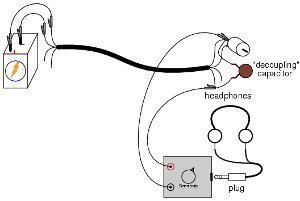
Applications
Decoupling capacitors are often used in devices that have several settings, such as power tools, hair dryers, and conventional ovens. They allow a device to switch back and forth between varying settings, such as speed or temperature, before the device’s power supply is able to maintain that setting. Devices could still have varying settings without a decoupling capacitor, but the effect would not be instantaneous and the user would have to wait for the power supply to adjust itself to the new setting.
Advantages
Decoupling capacitors are advantageous because they are small and hardly noticeable, do not require any additional energy, and allow devices to change between various settings instantaneously. Decoupling capacitors also prevent damage to the power supply from occurring by buffering any fluctuations that occur in the device’s output. This is especially true in devices that contain a loop-back mechanism that induces unused energy from the device’s output back into the device’s input.
Follow Us!