

A MOSFET (Metal Oxide Semiconductor Field Effect Transistor) is a device that switches or amplifies an electronic signal. MOSFET technology has made computers much smaller and more efficient than they once were by handling large amounts of electricity in very small spaces. MOSFETs are also crucial for both digital and analog signals and are found in microprocessors, integrated circuits, and other logic-based devices.
How a MOSFET Works
MOSFET transistors consist of a semiconductive layer and a metal layer that oxygen separates. These layers can also be referred to as source, gate, and drain respectively. As a voltage is applied at the source, usually on the metal layer, the oxygen layer serves as a gate or channel that allows electricity to flow between the other two layers. The electricity is then dissipated in the semiconductor layer and transferred to a plethora of devices that regulate logic functions. When electricity is not applied to the source or not of a high enough voltage, the MOSFET switches OFF. By alternating between an ON and OFF state, logic can be generated by assigning values to each state.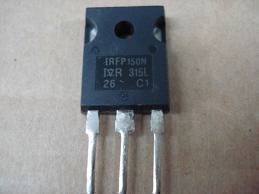
Applications
MOSFET technology is used in a wide variety of applications, the most notable being integrated circuits. MOSFET technology is found in every computer system, ranging from personal computers to commercial servers, and serves a crucial role as all digital devices’ logic generator. In addition to digital technology, MOSFET is used in analog systems to change both the characteristics and performance of an analog circuit by changing the length and width of the MOSFET used.
Advantages
MOSFETs can be constructed on extremely small scales and integrated into a wide variety of devices. MOSFETs support both positive and negative voltages, sustain a blocking voltage of 120 Volts, conduct 30 Amperes, and control loads over 2,000 Watts.
Disadvantages
MOSFETs are prone to overheating due to their high electrical demands and the small spaces they are placed in. This heat production can lower performance in nearby circuits by making them operate slower and have shorter lifetimes.
Follow Us!