RSS Feed

Astrophysics

What is Permittivity of Space?

What is Permittivity of Space?

Permittivity of free space or vacuum permittivity refers to the interaction between electricity and force as well as the effects of space on electrons. In a purely theoretical sense, permittivity of free space refers to a vacuum’s ability to maintain the bonding effects of individual electrons.

Fine Structure Constant

Fine Structure Constant

The Fine Structure Constant is a constant in theoretical physics that determines the strength of the interaction between two opposing electromagnetic waves. The Fine Structure Constant is used for a wide variety of purposes, but is entirely hypothetical and does not depend on any real units of physics.

Apogee

Apogee

Apogee is a term used to describe the point at which a satellite or object in orbit is at its furthest distance away from the Earth. When an object is at its apogee, it travels much slower than at any other point in its orbit because the Earth has less of a pull on it.

Perigee

Perigee

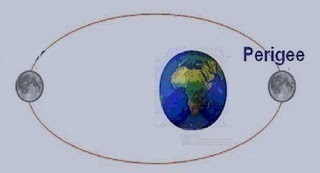
Perigee is a term used to describe the closest point at which an object orbits the Earth or another object in space.

What is a Geostationary Orbit?

What is a Geostationary Orbit?

A geostationary orbit is when a satellite orbits the Earth at the same speed as the Earth’s rotation at a fixed location. The satellite remains in the same position while it provides coverage of the same area on the Earth’s surface.

What is a Geosynchronous Orbit?

What is a Geosynchronous Orbit?

A geosynchronous orbit is when a satellite or other device’s orbit matches the Earth’s rotation so that the satellite travels around the Earth in a straight line and stays at the same point in the sky relative to the Earth.

Blackbody Radiation

Blackbody Radiation

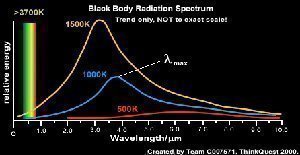
Blackbody radiation refers to the electromagnetic radiation that a blackbody material expels. Blackbody materials are substances that absorb all electromagnetic radiation that comes in contact with it, including light and heat. While a perfect blackbody material does not exist in nature, substances such as ash, soot, and granite come close.

Ion Propulsion

Ion Propulsion

Ion propulsion refers to a method of space travel in which accelerating ions, rather than traditional chemical rockets, speed up a spacecraft. While ion propulsion produces very little thrust in comparison to chemical propulsion, it produces consistent acceleration that allows the spacecraft to eventually travel faster than a chemical rocket would.

How Do Quasars Form?

How Do Quasars Form?

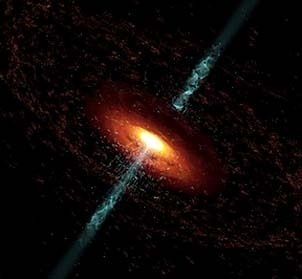
Quasars are a phenomena that, to this day, continue to baffle and confuse astronomers. There are different theories. One is that a quasar is formed from a super, massive black hole. Another theory is that a quasar is actually a baby galaxy and is at the earliest stages of development.

How Do Stars Form?

How Do Stars Form?

Stars form within clouds of dust that are scattered around the galaxies of our Universe. In essence, a star is dust that is pulled toward a central point of gravity and, when this happens, begins to heat up. The formation of a star results in something like our own Sun which took 50 million years to turn into what it is today.