Cryptographic Algorithms
Symmetric Cryptographic Algorithms
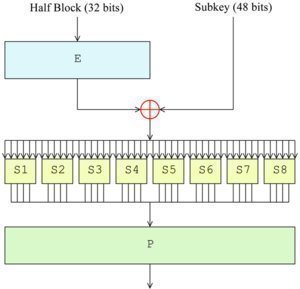
DES (Data Encryption Standard) is perhaps the most widely used cryptographic algorithm. DES is based upon IBM’s Lucifer algorithm. The NBS (National Bureau of Standards) and the NSA (National Security Agency) adopted DES as a federal standard in 1977. DES is a symmetric cipher with an effective key length of 56 bits.
Triple-DES is a variant of DES which encrypts the plaintext with the DES algorithm three times.
IDEA (International Data Encryption Algorithm) is a commercial symmetric cipher developed in 1990 which uses 128-bit keys.
Blowfish is a symmetric cipher with a variable key length from 32 to 448 bits.
A limited variant of Rijndael was selected by NIST (National Institute of Standards and Technology) as the new AES (Advanced Encryption Standard) algorithm in 2001. Rijndael is a symmetric cipher with a variable key length.
Asymmetric Cryptographic Algorithms
The RSA algorithm was invented by Ronald L. Rivest, Adi Shamir, and Leonard Adleman in 1977. RSA is an asymmetric cipher with a variable key length.
Elgamal is an asymmetric cipher with a variable key length.
More Cryptographic Algorithms
Other cryptographic algorithms include MARS, RC6, and Twofish.

Comments (1)
Leave a Reply
- Symmetric and Asymmetric ciphers
In a symmetric cipher, both parties must use the same key for encryption and decryption. This means that the encryption key must be shared between the two parties before any messages can be decrypted. Symmetric systems are also known as shared secret systems or private key systems. Symmetric ciphers are significantly faster than asymmetric ciphers, [...]...
- DES (Data Encryption Standard)
DES (Data Encryption Standard) is a symmetric cipher defined in Federal Information Processing (FIPS) Standard Number 46 in 1977 as the federal government approved encryption algorithm for sensitive but non-classified information. DES was developed by IBM and was based upon IBM’s earlier Lucifer cipher. DES utilizes a 56-bit key. This key size is vulnerable to [...]...
- Cryptographic Libraries
Cryptography is very difficult. It is even more difficult to tell if you have done it correctly. If you design and implement your own cryptographic algorithm, the odds are that you will fail to create a secure system. It is much better to code your application to use an existing cryptographic library which has been [...]...
- AES (Rijndael)
AES (Advanced Encryption Standard) is a symmetric cipher defined in Federal Information Processing (FIPS) Standard Number 197 in 2001 as the federal government approved encryption algorithm. The NSA has approved 128-bit AES for use up to SECRET level and 192-bit AES for use up to TOP SECRET level. AES is based upon the Rijndael algorithm, [...]...
- Diffie-Hellman
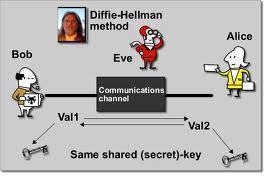
Diffie-Hellman is an asymmetric cipher defined in U.S. Patent 4,200,770 in 1977, the same year that IBM’s algorithm was selected as the Data Encryption Standard. The Diffie-Hellman patent expired on 6 September, 1997. The Diffie-Hellman algorithm is named after its creators: Whitfield Diffie and Martin Hellman. ElGamal is a variant of Diffie-Hellman which was invented [...]...


help me fir Cryptographic Algorithms