Dictionary Attack

A dictionary attack consists of trying “every word in the dictionary” as a possible password for an encrypted message.
A dictionary attack is generally more efficient than a brute force attack because users typically choose poor passwords.
Dictionary attacks are generally far less successful against systems that use passphrases instead of passwords.
Improving Dictionary Attacks
There are two ways to improve dictionary attack success.
The first way is to use a larger or more dictionaries. Technical and foreign language dictionaries increase the overall chance of discovering the correct password.

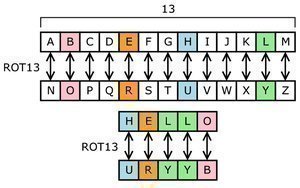
The second way is to perform string manipulation on the dictionary. For example, the dictionary may have the word “password” in it. Common string manipulation techniques try the word backwards (drowssap), with common number-letter replacements (p4ssw0rd) or different capitalization (Password).
Of course, very small dictionaries may lead to the fastest success if one or more of the targets is encrypted with a very weak password. A short list of girls’ names can yield amazing results.
A dictionary of potential passwords is more accurately known as a wordlist.
What to Do if the Dictionary Attack Fails
If an extensive dictionary attack fails, it may be worthwhile to resort to a brute force attack. A brute force attack is more certain to achieve results eventually than a dictionary attack.

Comments (7)
Leave a Reply
- How Does RAR Password Recovery work?
RAR Password Recovery is a password recovery software that is specifically designed to recover lost passwords for RAR and ZIP files. RAR Password Recovery is available from a number of sources and is available in both trial and full versions, although the trial version only allows users to recover passwords that are three characters long. [...]...
- How Does ICQ Password Recovery Work?
Methods of ICQ password recovery include: Resetting your ICQ password online Recovering stored ICQ passwords ICQ password brute force attack Reset your ICQ Password The easiest way to recover a ICQ password is to go to the ICQ Get a New Password page. To use this page, enter your ICQ number and ICQ will e-mail [...]...
- Known Ciphertext Attack
A known ciphertext attack is an an attack where the cryptanalyst only has access to encrypted ciphertext. A known ciphertext attack is the easiest of the common cryptanalysis attacks to mount, because is requires the least amount of control over the encryption device. Conversely, the known ciphertext is the most difficult of the common methods [...]...
- How Does PDF Password Recovery work?
PDF documents can utilize two passwords: Password to open Password to restrict printing and editing Password to Open The Password to open requires a user to enter a password to view the document. When the user sets a Password to open, all of the strings and streams in the PDF document are encrypted with [...]...
- Known Plaintext Attack
A known plaintext attack is an attack where the cryptanalyst has access to the ciphertext and the plaintext of one or more pieces of data. A known plaintext attack is somewhat easier to mount than a chosen plaintext attack, because a known plaintext attack does not require the cryptanalyst to be able to feed data [...]...


Hi.
I would like to know if I can recover a gmail account using this dictionary attack???
Thank you.
Glaucia, according to my quick search yes, but I wouldn’t advise that. Google has their own password recovery process. You shouldn’t need to do an attack, unless of course it’s not your account, in which case I still don’t advise it!
Hey, is there any ‘free, good & virus free’ dictionary attack software available on the net ?? i havent been able to find any.
Thanks for the answer,Daniel
what is happening is that gmail does not recognizes me as the owner of the address,so I would “attack” myself.
But,as I am so freaking desperated,I’m waiting for a hacker to try to solve this… :sigh:
If he can’t, may I come back here and get your help to recover my account?
I’m not a hacker. I’m afraid a hacker would know a lot more about how to resolve this than I (I’m also not the author of the above text). Has he been successful?
Yeah,memenode…
but now that %$%¨$@&%$#&$#& don’t wanna give it back to me
Originally posted by Glaucia: “Yeah,memenode…
but now that %$%¨$@&%$#&$#& don’t wanna give it back to me
”
Hmm.. he basically stole your account under pretense of recovering it for you?
Then he’s officially a “cracker” (a word used for immoral hackers). Maybe you could contact Google, explain the situation and have them change your account info, along with a strong (harder to crack) password, and give it to you, locking the hacker out.