
Rubber Hose Cryptology

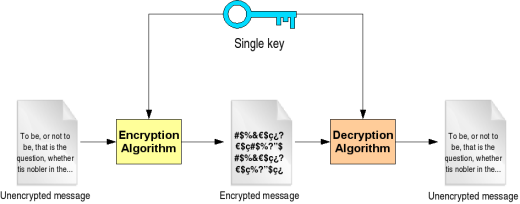
Rubber Hose Cryptography refers to a file system in which multiple archives are encrypted and hidden on the same disk in a way that makes each archive appear to be the size of the entire disk. Rubber Hose Cryptography is often used to hide illegal or confidential information in an attempt to prevent theft or detection of the hidden data. Because each archive must be decrypted separately and rest atop one another in layers, no archive in a Rubber Hose file system knows anything about the other archives. This prevents a data thief from discovering hidden data in one archive if he/she is able to decrypt a separate archive.
How Rubber Hose Cryptography Works
Rubber Hose Cryptography works by filling the entire hard drive with random characters that are indistinguishable from encrypted data. The file system then takes each archive of real data the user has, breaks it into small pieces, and scatters it around the hard drive in random places. While the file system keeps a map of where all the pieces were scattered, each archive has its own map and requires its own encryption key. Without having all encryption keys, the file system will not display any real information and each archive that has been decrypted will appear to be the same size of the full hard drive. By doing this, Rubber Hose Cryptography is immune to both mathematical analysis and physical disk testing.
Applications
Rubber Hose Cryptography is rarely used or modified, but is available via Linux Kernel 2.2, NetBSD, and FreeBSD. Rubber Hose Cryptography was designed to protect the users of encrypted systems, who can be prosecuted in some countries for not turning over the encryption keys of a server. Rubber Hose Cryptography allows a user to provide the police, or another organization, with the encryption key of a false archive which will appear to be the entire volume of the hard drive.
- Cryptology
Cryptology Cryptology is the science which incorporates both cryptography and cryptanalysis. Cryptologists Practitioners of cryptology are known as cryptologists. Cryptology in Context A cryptographer will use cryptography to convert plaintext into ciphertext and a cryptanalyst will use cryptanalysis to attempt to turn that ciphertext back into plaintext. Both the cryptographer and the cryptanalyst are cryptologists. [...]...
- Metal Rubber
Elasticity and conductivity are often mutually exclusive in industrial materials, making it difficult to find a material that one could twist and bend and use for electric conduction at the same time. Electrical wires, often made out of copper or some other metal stretched out into threadlike widths, were invented to try and bridge the [...]...
- Cryptography
Cryptography is the study and practice of encoding data using transformation techniques so that it can only be decoded by specific users. In simpler words, it is a theory of secret writing. Practitioners of cryptography are known as cryptographers. Cryptography is the technique of using mathematics, computer science and engineering to encrypt and decrypt information. [...]...
- How to Encrypt an entire Disk
Sometimes instead of encrypting a file or a set of files, you want to encrypt an entire file system, partition, or disk. One of the chief advantages of this approach is that, once you have entered your encryption key, the encryption becomes transparent to both you and your applications. When you power off your computer, [...]...
- PGP (Pretty Good Privacy)
PGP (Pretty Good Privacy) is a data encryption and decryption program used in e-mail messaging, encrypting/decrypting texts, files, or even disk partitions, in order to provide security of data. The program was created in 1991, by Phil Zimmerman. Pretty Good Privacy encryption is based on using a serial combination of data compression, hashing, public-key cryptography [...]...