

No one person invented electricity, but its modern day use is the result of the work of inventors, scientists, and researchers who toiled over the subject for millennia. In order to fully understand electricity in our modern world, one has to first understand the pioneers who date back to as early as the ancient Greeks, and contemplate their work to harness the natural power of electricity and turn it into something useful to the average person.
The Role of Thales of Miletus
The history of electricity begins not with electricity as we know it today, but with a more rudimentary form of the power, static electricity. According to historical documents, the first known discovery of static electricity actually dates back to 6th century BC, where a man named Thales of Miletus realized rubbing a fur with some other object would cause the two objects to attract each other. Amazed by this phenomenon, he began to rub all kinds of objects together, but had the greatest success with amber, even to the point where he could get sparks to form.
The Role of Gilbert, Cardno, and Von Guericke
Unfortunately, the study of electricity never really took off until the 1550s. It was then that the Italian physicist, Girolamo Cardano, started doing work that involved electrical and magnetic forces. His follower, William Gilbert, began to expand on Cardano’s theories in the 1600s, although the actual word “electricity” was not coined until 1646.
Otto von Guericke created the first modern applications of electricity in 1660. His invention of the first electrostatic generator paved the way for electricity to finally be recognized as an actual field of study. This invention was followed by a variety of tests, which culminated in the realization that electricity can travel freely across a vacuum, that there are materials that act as conductors and others that act as insulators, and that two types of electricity exist (positive and negative).
The Turning Point for Electrical Theory
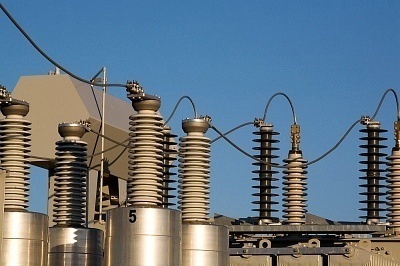
Work done in the 1700s on electrical theory turned out to be a major turning point for the field and is wholly responsible for modern electrical applications. During this time, the first capacitor was invented and it was finally determined that static electricity could be transformed into an electric current. Also, during this time, Benjamin Franklin established the link between lightning and electricity during his famous kite in a thunderstorm experiment (which may or may not be totally correct).
The work of Franklin and his contemporaries gave rise to some of the biggest names in the electrical field. These men included Michael Faraday, Andre Ampere, Georg Simon Ohm, Luigi Galvani, and (perhaps the most well known) Alessandro Volta, all of which have their names permanently attached to some measure of electricity. Together, their work allowed for the creation of anodes, cathodes, and batteries.
The Electrical Theory Revolution
The early nineteenth century produced even more amazing discoveries in the field of electricity, including work that individuals like Werner von Siemens and John Pender made famous. These men created some of the first companies that were created specifically to examine electricity and its potential to make life easier for humanity.
Despite the major breakthroughs during the early nineteenth century, they were nothing compared to what was to come. Great minds like Nikola Tesla, Thomas Edison, Samuel Morse, Antonio Meucci, George Westinghouse, and Alexander Graham Bell worked to create some of the most incredible inventions to ever come from the study of electricity. These inventions included the induction motor, the light bulb and a method of distributing electrical energy, the long range telegraph, the telephone, the first electrically powered locomotive, and the founding of the widely successful telephone industry respectively.
All of the research and study in the field of electricity finally culminated in the early twentieth century in what is called the War of the Currents between Edison, Westinghouse, and Tesla. The three men battled for public support for either direct current (DC) (power that Edison proposed) or alternating current (AC) (Westinghouse proposed this and Tesla supported it). Eventually, it was determined that both types of currents should be used, but in different sectors. Although AC currently dominates, they are both still in use today.

Ann McAlister
I am looking for something about a man with the last name of Portman who helped somehow with the development of electricity in the very beginning?
PhysicsProf
How could this article omit Maxwell? His 4 equations are the basis of most all electromagnetic theory and are even mostly consistent with Relativity and were published in the 1860’s. They are the starting point for every course in electricity and magnetism from undergraduate to graduate study.
poop
thank you for the great info!!!
I hope i get an “A”
Yuvaraj.K
Thales miletus in the father of electricity.
he is only invent the electricity in 624 BC – c. 546 BC.
ali
the current was invented by alesstro volta……!! u can check on google …..!! thank you
vignesh
how the hybrid car works . i want to know more about the hybrid cars and the advanced techniques.
pradip t bhowate
sir,
is it possible to store electricity i.e.not like battery
Jacob
is there atoms in every living thing
Hurtownia elektryczna
should be bit more about Tesla right?
zhbcjhn
thomas edison
assass1n57
thomas edison only made a little bit of stuff with electricity.i dnt get y people think he invented electricity! tesla was the one who developed electricity and stuff!even though tesla worked for thomas edison tesla showed thomas edison his experiments and wich made thomas edison to copy him and make it further from wut tesla said!
maddsin
awesome facts,
kris
Im sorry but i have to dispute the findings of this paper. AC was not purposed by westing house it was tesla who craeted the AC term and the way to make it. it was westinghouse who supported it.
LewyLewis
Electricity has a lot more to come for all of us STAY TUNE and see what happens….
KAISHA
HI!
I WHANT TO KNOW WHAT THINGS DID THE PERSON WHO INVENTED ELECTRICITY US?
THANKE YOU!
tina
hi do you know who invented electricity
poop
it was the greeks who discovered it when rubbing fur on amber caused an attraction between the two. It was an electric charge
kaisha
thank you.
Lolzman
Alll of those are lies….the men who invented electrision is Nikola Tesla…a man born in Serbia but lived and worked as scientiest in Amerika (actualy i havent rode all of those..if its writen tht Nikola Tesla invented electrision….then sorry for posting this comment ^^ XD :DD). :)) 😀 😆 🙂 😉 8) :-* 😮 😕 😡 😮 😛 🙄
nadee
this is very fascinating 😛
SSn
Please hug electricity 😆
Nneozor
Thank you so much for your most enlightening article on invention of electicity.I have gained a lot from it.I hope one day to be part of a team of inventors who would make mind-blowing inventions.
Thanks again.
umesh kumar
HI,
can we use electrolytic capacitor on DC. :sigh: