

A linear actuator is a mechanical device that makes a linear motion, usually via a hydraulic pump or electromagnetic gear. Other forces can be used to create linear motion. The different types of linear actuators include screw, wheel and axle, cam, hydraulic pump, pneumatic, piezoelectric, and electro-mechanical. Linear motors, wax motors, and telescoping linear actuators can also produce linear motion.
How a Linear Actuator Works
While all linear actuators depend on an external, non-linear force to drive a piston back and forth, different types of linear actuators work in different ways. Hydraulic pump actuators, for example, depend on a hydraulic pump to compress and decompress the two sides of a piston in order to push it back and forth. Because the piston is attached to an external shaft, the shaft moves with it. On the other hand, a wax motor uses an electric current to melt a block of wax, causing it to expand. As the wax expands and contracts with varying electrical currents, a plunger that is pressed against it moves back and forth in a linear motion.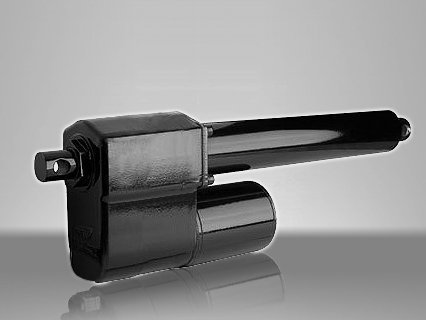
Applications
Linear actuators are used in nearly every type of electrical device that requires a linear motion. Power drills, pumps, and other industrial appliances often rely on linear actuators to move other objects. Linear actuators are also used in some types of motors and are often used in the robotics industry to provide robots with motor skills. In fact, a simple piston inside of an electric motor or fuel-injection engine uses linear motion, and therefore acts as a linear actuator.
Advantages
Each type of linear actuator is made differently and has its own advantages. Mechanical linear actuators, for example, are cheap, reusable, and self-contained. Piezoelectric linear actuators can create extremely small linear motions and can consequently be used for microcomputer and micro-mechanical applications. Hydraulic linear actuators can produce large amounts of pressure and can be used for heavy duty applications. Pneumatic linear actuators are powerful, compact, lightweight, very simply designed, and provide repeatable motion.
Disadvantages
While each linear actuator has its own advantages, each also has its disadvantages. For example, mechanical linear actuators are strictly manual and cannot be automated. Piezoelectric linear actuators are slow, can only move across small areas, are very expensive, require a high voltage to be effective, and require a secondary force to push the shaft back into its initial position.
Follow Us!