Home     Blog

Wireless Mesh Network

Wireless Mesh Network

A wireless mesh network relies on radio signals to allow several devices within a coverage area to communicate with each other. Wireless mesh networks are often used in conjunction with other networks in order to give users reliability and stability. This is because wireless mesh networks communicate with each other through any device within the coverage area and automatically restore communication if one device stops working. Wireless mesh networks include everything that other networks do (rou

[ read more ]

Linksys Default Password

Linksys Default Password

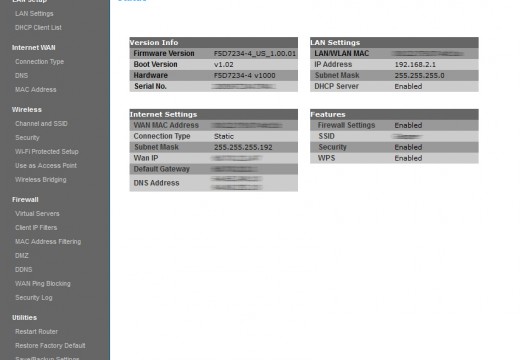
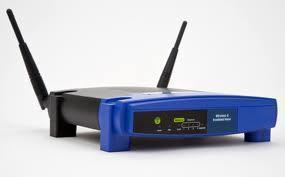
Linksys is a leading producer of networking devices, including wireless routers, modems, and network storage devices. Millions of people worldwide use Linksys products for both residential and commercial purposes. Linksys Default Password Linksys routers have a built-in control panel that allows you to change configuration settings, set the router to work with other devices, and set up network security. You can access this control panel by entering 192.168.1.1 into the address bar of any w

[ read more ]

802.11g

802.11g

802.11g is one of the standards used for high speed wireless networks, commonly known as Wifi. This standard was created by the IEEE (Institute of Electrical and Electronics Engineers) in June of 2003 and uses a 2.4 to 2.5 gigahertz radio frequency to send and receive data from one device to another. There are several standards that are in use today for wireless communication, others include 802.11a, 802.11b and 802.11n. The standard 802.11g is becoming quite popular during the last several year

[ read more ]

How to Add a Printer to a Wireless Network

How to Add a Printer to a Wireless Network

If you want to add a printer to a wireless network, you need to: 1) Ensure that the printer has at least one USB port. 2) Purchase a wireless adapter and connect it to the printer's USB port. Since wireless adapters work on Plug-and-Play technology, the printer should automatically detect it and begin installing all of the drivers necessary for the wireless adapter to function properly. 3) In order to specify which wireless network the printer should connect to, connect the printer to

[ read more ]

Cantenna

Cantenna

A Cantenna is a waveguide antenna that is directional in nature, and is used to better detect or broaden a wireless network's range. The original Cantenna was a 50 ohm resistive load that amateur radio enthusiasts used. It is a simple product that can be created with an empty Pringles can (and more recently, wider cans). It can be used to transmit and receive signals. Most users make a Cantenna in order to use a wireless network that is out of their computer's reach. How to Create a Cantenna

[ read more ]

Wi-Fi (802.11)

Wi-Fi (802.11)

WiFi 802.11 describes a number of radio frequencies that can be used for wireless Internet access. WiFi 802.11 is specifically designed and maintained for the use of wireless Internet and can be found in most residences and commercial buildings in the United States and abroad. WiFi 802.11, which is also known as IEEE 802.11, consists of the 802.11a, 802.11b, 802.11g, and 802.11n sub-standards, each of which is more efficient than the one before it. WiFi 802.11n is currently the most powerful sub

[ read more ]

RSN (Robust Secure Network)

RSN (Robust Secure Network)

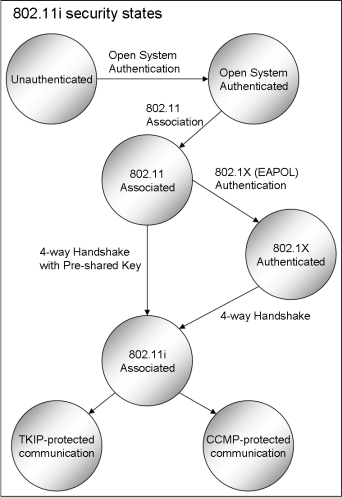
RSN (Robust Secure Network) is a protocol for establishing secure communications over an 802.11 wireless network. RSN (Robust Secure Network) is part of the 802.11i standard. The RSN Protocol Process The RSN protocol functions as follows: The wireless NIC sends a Probe Request. The wireless access point sends a Probe Response with an RSN Information Exchange (IE) frame. The wireless NIC requests authentication via one of the approved methods. The wireless access poin

[ read more ]

Wireless Access Point

Wireless Access Point

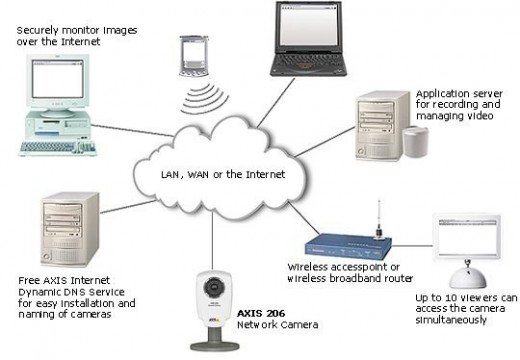
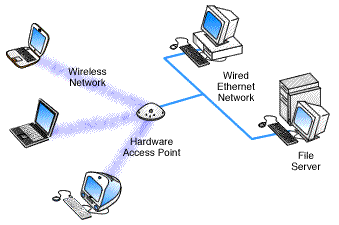
Wireless Access Point (WAP) is essentially hardware equipment that enables wireless devices to connect to wireless networks, via standards such as Wi-Fi, Bluetooth and so on. The WAP device typically connects to a wired network, and acts as a communication interface between the wireless devices and wired devices on the network. The WAP device enables the transmission of data between wireless and wired devices. For example, in an office setup multiple users can print documents from their worksta

[ read more ]

Antenna Types

Antenna Types

In antenna engineering, a dipole is the most basic type of antenna and serves as basic framework for all other antennas. Dipoles consist of a metal rod that acts as a conductor with a radio feed line at its core. The conductor splits the signal and creates a positive electrical charge on one end of the dipole and a negative electrical charge on the other end. Thus, a dipole is an antenna with two (di) poles. This allows the dipole to create an electromagnet wave that can be picked up by other di

[ read more ]

HSDPA

HSDPA

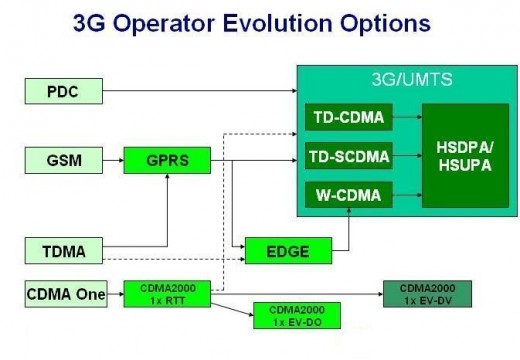
High-Speed Downlink Packet Access (HSDPA) is also known as High-Speed Downlink Protocol Access. HSDPA is a protocol for mobile telephones. It is a third-generation (3G) High-Speed Packet Access technology designed to speed up network capacity and data transmission rate of cellular phones. HSDPA is associated with various Universal Mobile Telecommunications System (UMTS) networks. These include the Global System for Mobile (GSM) Communications. Currently, HSDPA can support speeds ranging from 1

[ read more ]

Page 4 of 10« First3456Last »