

The fifth state of matter is actually the first phase of matter. It is called a Bose-Einstein Condensate. Matter in the fifth state is really slow moving and extremely condensed. It only exists at near absolute zero temperatures and is very fragile and unstable. It was discovered in 1995 by Eric Cornell and Carl Weiman through experimentation with rubidium, but the credit goes to Satyendra Nath Bose and Albert Einstein because they thought of the concept of this state of matter first. The only difference is that they did not have the tools available to make it possible to observe the fifth state of matter in the 1920's.
How to Make Bose-Einstein Condensates
It is not impossible to make the Bose-Einstein Condensates, but it does take lots of energy. In fact it takes so much energy that you would thing that you would be doing the opposite of super-cooling elements during the process. It would involve the use of a laser and the element rubidium. The laser is positioned in such a way that it is bounced off of the rubidium sample when the process is underway. The photons from the laser are traveling so fast that they bounce off with even more energy than they started with. This transfer of energy from the rubidium to the laser photon beam actually reduces the temperature of the rubidium.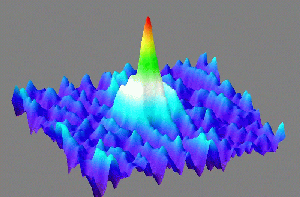
What Happens in Bose-Einstein Condensates?
Two main things happen in Bose-Einstein Condensates that should be noted. The speeds of the atoms are slowing down the closer that they get to absolute zero temperature. Once they reach a certain temperature which will range within a few billionths of a degree above absolute zero, the atoms will start to merge into one, occupying the same space even. This is very strange behavior but offers insight into the possible theory that the "Big Boom" theory is correct. The super-atoms created under these temperatures are very fragile and usually are destroyed as soon as the laser stops cooling them. Keeping a super-cooled collection of millions of atoms is very expensive and uses too many resources to do continuously for extended periods of time.
Other Elements which Create Bose-Einstein Condensates Easily
There are a number of elements which have been created into great examples of Bose-Einstein Condensates. They take different amounts of energy to produce the condensate of each element, but they each react in a similar manner. The following are great elements to use for Bose-Einstein Condensates:
- Lithium – Abbreviated to Li and atomic number 3, Silver White Alkali Metal
- Sodium – Abbreviated to Na and atomic number 11, Silvery White Highly Reactive Alkali Metal
- Potassium – Abbreviated to K and atomic number 19, Silvery White Alkali Metal
- Chromium – Abbreviated to Cr and atomic number 24, Lustrous Steel-Gray Metal
- Strontium – Abbreviated to Sr and atomic number 38, Yellowish Silver Alkaline Earth Metal
- Rubidium – Abbreviated to Rb and atomic number 37, Silvery While Alkali Metal
- Cesium – Abbreviated to Cs and atomic number 55, Silvery Gold Alkali Metal
- Ytterbium – Abbreviated to Yb and atomic number 70, Silvery White Metal
Follow Us!