

ESR Spectroscopy (Electron Spin Resonance Spectroscopy or Electron Paramagnetic Resonance Spectroscopy) is a technique used for studying chemical species that have one or more “free radical” or unpaired electrons. Most stable molecules only have paired electrons without any free radicals, so ESR Spectroscopy is used less often than NMR (Nuclear Magnetic Resonance) Spectroscopy, the usual technique for studying chemical bonds. This also means that ESR Spectroscopy is a highly specific technique.
How does ESR Spectroscopy Work?
A constant photonic frequency, such as microwave radiation, is used in conjunction with an alternating magnetic field so that electrons rapidly move back and forth between their high and low orbits. As they move faster and pick up more energy, the gap between their high and low orbits gets smaller. As the microwaves move across this gap, a sensor can detect the difference in energy levels.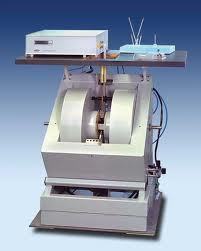
Applications
ESR spectroscopy is most often used in medicine and biology to study free radical electrons’ properties that chemical and physical reactions produce. For example, when high levels of energy from heat, light, or microwave radiation bombard ice, free radicals such as H, OH, and HO2 are created while the ice is converted to water. Free radicals can also be attached to a specific location within a cell and can be used to analyze the cell’s environment when ESR is applied.
Advantages
ESR spectroscopy is the preferred means of detecting and analyzing free radical electrons for many reasons. For example, ESR spectroscopy can be performed very quickly, often in fifteen to twenty minutes, and provides an accurate analysis of free radical activities. Likewise, ESR spectroscopy results are usually very easy to understand and can be recorded as the free radical electrons are studied. Also, while other spectroscopy techniques can identify free radicals and paired electrons, ESR spectroscopy identifies free radicals only, a function that is very important in the study of unpaired electrons.
Disadvantages
While ESR spectroscopy has several advantages over other spectroscopy techniques, it also has the disadvantage of requiring low temperatures in order to detect free radical electrons. This is because electrons typically move too fast for an accurate analysis to be made. While this is not a significant disadvantage, it means that ESR spectroscopy must be performed in a laboratory that is specifically designed to provide these low temperatures.

Follow Us!