

Potassium chlorate is a chemical compound that contains chlorine, oxygen, and potassium. In its pure form, it is white and crystalline in appearance. It is the most common chlorate used in industry, school, research, and commercial labs. Potassium chlorate is commonly used: to prepare oxygen, in safety matches, as an oxidizing agent, in fireworks and explosives, and in fruit cultivation.
Potassium Chlorate Uses
Potassium chlorate was originally one of the key ingredients in firearm percussion caps or primers, and is still infrequently used in this way today. It is more commonly used in fireworks production currently, which include noise makers and other popular novelty fireworks. Potassium chlorate is also used in plastic explosives, gunpowder, and laboratories to produce oxygen. It is also used in chemical oxygen generators or chlorate candles, which serve as the oxygen-supply system for space and underwater craft.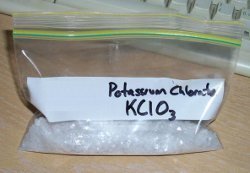
How is Potassium Chlorate Produced?
For major potassium chlorate commercial production, sodium chloride is electrolyzed. This results in the formation of sodium chlorate, which is then reacted with potassium chloride, creating potassium chlorate. The substance can also be produced on a small scale. This is done when hypochlorites undergo thermal disproportionation and become a chlorate, which is then boiled until it becomes a chloride. At this point, Kcl is added to the mixture. Chlorine and chlorine dioxide gas are byproducts of this mixture, therefore this process should be conducted in a properly ventilated lab environment.
Potassium Chlorate Safety
Because potassium chlorate often has an extreme reaction when it comes in contact with many materials, it has to be handled with care. The substance is known to ignite or explode spontaneously, and can significantly burn anything it comes in contact with when combined with a combustible material. If potassium chlorate is mixed with sulfuric acid or any other fuel, it will ignite. Fireworks created with potassium chlorate deflagrate if sulfur is mixed with them. If the substance is mixed with any flammable compound, the result will be extremely shock intensive.


Follow Us!