

C Band is the original frequency allocation for communications satellites.
C-Band uses 3.7-4.2GHz for downlink and 5.925-6.425Ghz for uplink.
The lower frequencies that C Band uses perform better under adverse weather conditions than the Ku band or Ka band frequencies.
C Band Variants
Slight C Band frequency variations are approved for use in various parts of the world.
| Band | TX Frequency | RX Frequency |
|---|---|---|
| Extended C Band | 5.850 – 6.425 GHz | 3.625 – 4.200 GHz |
| Super Extended C-Band | 5.850 – 6.725 GHz | 3.400 – 4.200 GHz |
| INSAT C-Band | 6.725 – 7.025 GHz | 4.500 – 4.800 GHz |
| Palapa C-Band | 6.425 – 6.725 GHz | 3.400 – 3.700 GHz |
| Russian C-Band | 5.975 – 6.475 GHz | 3.650 – 4.150 GHz |
| LMI C-Band | 5.7250 – 6.025 GHz | 3.700 – 4.000 GHz |
C Band Dishes
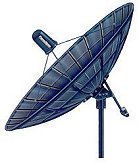
C Band requires the use of a large dish, usually 6′ across. C Band dishes vary, between 3′ and 9′ across, depending upon signal strength.
Because C Band dishes are so much larger than Ku and Ka Band dishes, a C Band dish is sometimes referred to in friendly jest as a BUD (Big Ugly Dish).

Ali Afzal
I want to say that I have receiver of Neosat and the satellite is 1055Asia3S-C and get good signal intensity but signal quality is too weak .and how to check diseqs works properly or not.
RAJKUMAR A
Pl sent me the price of C band dish
aliou o keita
Please issue of c-band cost detail sent my email id
HITESH
INFORMATION FOR C-BAND
PLEASE ISSUE OF C-BAND COST DETAILS SENT MY EMAIL ID
himmatshinh
dear sir,
pls send to me all c-band free satellite angle & transpoders