

Downlink is a term in telecommunications that is used to refer to a data transmission in which data flows from an orbital satellite receiver to a ground-based transmitter. Downlink transmissions rely on the C Band between 3.7 and 4.2 GHz, the Ku Band between 11.7 and 12.7 GHz, and the Ka Band between 18.3 and 18.8 GHz, as well as between 19.7 and 20.2 GHz. Downlink is often used in astronomy, radio science, and telecommunications.
How Downlink Works
When a ground-based transmitter transmits data to a satellite in Earth’s orbit, the satellite stores the information until it can decide what to do with it. The satellite then targets a ground-based receiver and transmits the data to it by using C Band, Ka Band, or Ku Band radio frequencies, depending on what the situation calls for.
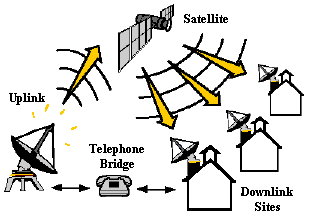 C Band radio frequencies, typically between 3.7 and 4.2 GHz for downlink applications, are used to transmit data through thick rain clouds and other adverse weather conditions, which can often disrupt data. Ka (Kurtz-above) Band radio frequencies, typically between 11.7 GHz and 12.7 GHz for downlink applications, are used to transmit data to small ground-based satellite dishes, such as those found on rooftops, and generally use more energy than C Band frequencies. Likewise, Ku (Kurtz-under) Band radio frequencies, typically between 18.3 GHz and 18.8 GHz, are used to transmit data to small satellite dishes, but are specifically used for broadcasting satellite television and Internet.
Applications
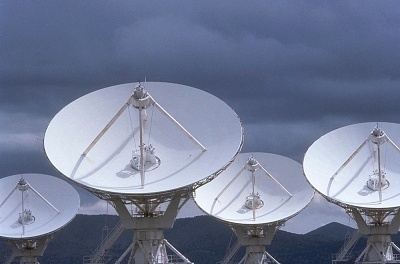
As downlink involves the transmission of data from an orbital satellite and a ground-based receiver, its applications are extremely diverse and plentiful. Downlink can be seen in any application that involves satellite communication, such as telecommunication systems, deep-space telemetry, satellite-based radar, and GPS systems.
etta.bartlett2
=
Thanda
What is the best frequency range for GOES receive antenna system