Feedhorn
The feedhorn is the part of a satellite dish system which gathers the reflected signal from the dish and focuses it towards the LNB.
It is a type of horn antenna that is deployed to convey radio signals between the transceiver and the reflector antenna. Horn antennas basically effect a transition between waves propagating through a transmission line like a waveguide and the waves propagating in free space. The shapes could be various, based on the final purpose of regulating some of the fundamental properties of gain, radiation pattern and impedance.
The feedhorn also does the job of attenuating unwanted signals from sources like adjacent channels. This is done by selection of the polarity of the waves that are to be received. As an accessory located at the focal point of a satellite dish system or a paraboloid antenna, it gathers the reflected signal from the dish and focuses it towards the Low Noise Block (LNB), which is usually affixed in or on the dish.
An LNB with an integrated feedhorn is referred to as an LNBF. Most LNBs are of this form, with a feedhorn at the front to catch high frequency satellite signals reflected from the dish.
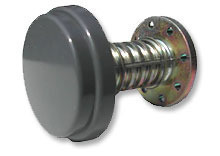

- ODU (Out-Door Unit)
ODU (Out-Door Unit) refers to the set of satellite equipment which is placed outside of the building. The ODU typically includes a satellite dish, a feedhorn, and a LNB (Low Noise Block). In bi-directional satellite systems, the ODU will also include a BUC (Block Up Convertor). The ODU is connected to the IDU (In-Door-Unit) by [...]...
- The Best Satellite Dish
There is no “one” best satellite dish. The best satellite dish for you depends upon several factors. Satellite Dish Size The larger the satellite dish, the better it will receive signals. Therefore, the largest satellite dish available is always the best satellite dish — except that few of us want a nine foot satellite dish [...]...
- How Does Satellite TV Work?
Satellite TV works by broadcasting video and audio signals from geostationary satellites to satellite dishes on the Earth’s surface. These geostationary satellites orbit the earth in a region of space known as the Clarke Belt, which is approximately 22,300 miles above the equator. Each of these satellites carries a number of transponders. These transponders each [...]...
- FTA Dish
Free To Air (FTA) dishes receive unencrypted television or radio broadcast signals. They can decode standard MPEG-2/DVB-S for digital television. FTA receivers are designed to detect active transponders and their channels without being pre-programmed thereby collecting any available information they can detect. With the use of these receivers, television viewers can receive transmissions without subscription. [...]...
- Linear LNB
LNB stands for low noise blocker and it is essentially an amplifier on the end of your small satellite TV dish or communications dish. The “Linear” portion of Linear LNB stands for the characteristics of the radio waves that are transmitted via the satellite in space to your dish (LNB). Two Types of Polarization Circular [...]...