

Forward Error Correction (FEC) is a type of error correction that involves encoding a message in a redundant way, which allows the receiver to reconstruct lost bits without the need for retransmission.
How Forward Error Correction Works
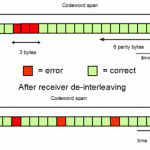
FEC works by adding “check bits” to the outgoing data stream. Adding more check bits reduces the amount of available bandwidth by increasing the overall block size of the outgoing data, but also enables the receiver to correct for more errors without receiving any additional transmitted data.
This dynamic makes FEC ideal when bandwidth is plentiful, but retransmission is costly or impossible.
The “check bits,” or redundant bits, that the sender adds to the data stream are coded into the data in a very specific way, which allows for efficient error correction by the receiving device.
Many different types of FEC coding have been developed.
A simplistic example would be a triple redundancy code, also known as (3,1) repetition code, where each bit of data is simply transmitted 3 times. The results of each triplet are averaged together to account for noise in the transmission, and a corrected result is decided on.
Other more advanced coding systems that are in use today include Reed-Solomon coding, a customizable coding scheme that is often used in DVB.
Applications of Forward Error Correction
Reed-Solomon coding is notable for its use in CD, DVD, and hard disk drives. Although these drives are not transmitting data in the traditional sense, FEC coding allows for error correction on bits that become corrupted through damage to the physical medium of the drive.
Many types of multicast transmissions also make use of FEC.
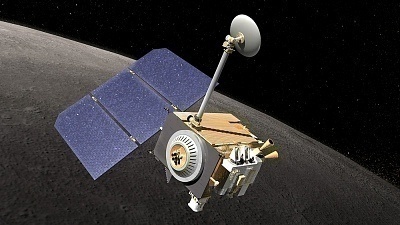
Forward Error Correction is particularly well suited for satellite transmissions, both for consumer and space exploration applications, where bandwidth is reasonable but latency is significant.
Forward Error Correction vs. Backward Error Correction
Forward Error Correction protocols impose a greater bandwidth overhead than backward error correction protocols, but are able to recover from errors more quickly and with significantly fewer retransmissions.
Forward Error Correction also places a higher computational demand on the receiving device because the redundant information in the transmission must be interpreted according to a predetermined algorithm.
Overall, Forward Error Correction is more suitable for single, long-distance, and relatively high-noise transmissions, rather than situations where smaller batches of information can be sent repeatedly and easily. In these cases, Backward Error Correction is much more likely to be suitable.
JE Starink
Please can you give me an answer for the following problem. There are two houses adjacent to each other. One house has a large tree infront of it, and receives the KU band tv very badly. Cutting this tree is not an option. The neighbour has an unlimited vieuw on the satellite, which both houses want to receive, and therefore receives the sattelite signal excellently. My question is can I use a twin LNB on the “good” dish, and using a double cable, one going to the “good” receiver and the other cable to the “bad” receiver. The double LNB gets now 2 power supplies from the different receivers, will that not blow up the LNB. Is my above proposal for a twin LNB valid or not, please send your answer to my email address, regards JE Starink South Africa
Chris
Does anyone know a list of disadvantages for Forward Error Correction Please?
Cheers
Chris Evans
Yes – Latency.
Forward Error Correction adds latency to a connection due to the way that errors have to be corrected.
Charlie cousins
Sorry to bother you, but I have a question for an assignment:
“Compare the processes and performances of the error control techniques known as Forward Error Correction (FEC) and the Blocked parity while transmitting data”
-Do you perhaps know of any benefits and drawbacks between the two?
Thank you
Ujjwal Swami
yes right it is so. latency is the issue with it.