
Home     Blog

IDU (In-Door Unit)

An IDU, or In-Door Unit, is a telecommunication device that is used in satellite television and Internet service to receive and decode satellite transmissions. An IDU is a box that connects to the user’s television and/or router and contains a built-in satellite receiver that may also be connected to a satellite dish on the roof or exterior wall of the user’s home. An IDU is responsible for receiving the satellite signals broadcasted by the user’s satellite service provider and decoding them in order to provide the user with satellite television and/or Internet access.

How IDU Works

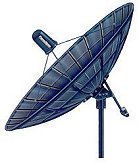
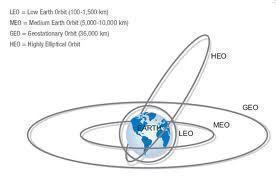
When a satellite provider broadcasts a transmission, that data is received by a satellite in Earth’s orbit and retransmitted to a specific area on the Earth’s surface. Any satellite dish in that area that is setup to receive that transmission’s frequencies can then receive the transmission and convert it into electrical impulses that are sent to the user’s IDU. The IDU can then convert the information into digital data and display it on the user’s television screen or pass it through the user’s modem and/or router in order to provide the user with Internet access.
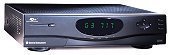
idu IDU (In Door Unit)

Applications

An IDU is used solely for the purpose of receiving and converting satellite transmissions into usable data for television service and Internet access. While IDUs have been modified in the past to provide users with additional services, such as Pay-Per-View channels or non-related satellite-based transmissions, this is often illegal and may result in loss of the user’s regular services if the IDU becomes damaged.

Advantages

IDUs are advantageous because they sit near the user’s television and provide television and Internet access without being exposed to the open environment. IDUs are relatively easy to operate and can provide the user with services such as Channel Guide and On Demand. IDUs are also lightweight and do not usually need to be directly operated in order to provide services to the user.
VN:F [1.9.17_1161]
Rating: 0.0/10 (0 votes cast)
Follow Will.Spencer on

Comments (1)


  1. bala says:

    Its possible to connect directly with my Indoor unit and my PC or MODEM ?

    VA:F [1.9.17_1161]
    Rating: 0.0/5 (0 votes cast)

Leave a Reply

Related Posts

  • ODU (Out-Door Unit)

    ODU (Out-Door Unit) refers to the set of satellite equipment which is placed outside of the building. The ODU typically includes a satellite dish, a feedhorn, and a LNB (Low Noise Block). In bi-directional satellite systems, the ODU will also include a BUC (Block Up Convertor). The ODU is connected to the IDU (In-Door-Unit) by [...]...


  • DBS (Direct Broadcast Satellite)

    A DBS, or Direct Broadcast Satellite, is a type of satellite that is used to broadcast data directly to a residence or commercial office, without the use of intermediary cables or other routing equipment. DBS systems are most commonly used for direct broadcast television and Internet access, in which users from anywhere in the world [...]...


  • DirecTV

    DirecTV is a direct broadcast satellite company that controls the majority of satellite television service in the United States. DirecTV’s main rival is Dish Network, which has considerably fewer customers and less annual revenue. While DirecTV does not provide services to the Eastern Hemisphere, it does provide services to much of the Western Hemisphere, including [...]...


  • Satellite Television Descrambler

    Most satellite television is encrypted using conditional access systems such as: DigiCipher II VideoCipher II RS Nagravision VideoGuard Irdeto Mediaguard Viaccess Conex To watch these encrypted television channels, you need a box which can decrypt them. This box is sometimes referred to as a satellite television descrambler. Satellite Television Descramblers Most satellite television descamblers are [...]...


  • Satellite Radio

    Satellite radio refers to a number of subscription-based radio broadcasting programs that are available in the US, Europe, and elsewhere that are dependent on satellites to provide mobile users with constant radio access. While terrestrial-based FM radio stations only provide radio broadcasts to a specific area, usually confined to the city they are located in, [...]...