Home     Blog

IFL (Interfacility Link)

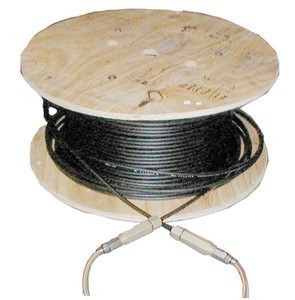
An IFL, or Interfacility Link, is a cable system that is used in facilities to connect an outdoor unit and an indoor unit. An outdoor unit refers to the satellite receiver or coaxial cable that connects a service provider to a company while an indoor unit refers to the coaxial cables, routers, or transmitters inside the building. IFLs are used to minimize the amount of interference received on the transmission by rerouting the signal through a combination of different technologies.


How IFL Works

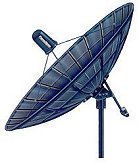
In a typical direct broadcast satellite system, services are transmitted to a facility by radio waves and are received by the facility’s satellite dish and receiver, which is the same way that services are provided to residences. When the radio waves are received by the facility’s satellite dish, they are converted into digital signals and directed to a receiver inside the facility via coaxial cables in order for the signals to be decoded and routed to the appropriate devices. If the radio waves were not converted to digital signals, they would be partially or completely blocked by the building, depending on the thickness of the building’s walls. By converting radio waves into digital signals and routing them into the building via coaxial cables, the signals are guaranteed to reach the appropriate devices.


Applications

IFLs are used for both commercial and residential purposes and are usually provided by the satellite company that is providing services. IFLs may also connect to other various devices or routing equipment on the inside of the user’s residence or commercial building in order for signals to be efficiently distributed amongst the appropriate devices. For example, a company may have an industrial wireless router or repeater inside the building which rebroadcasts signals that are received via coaxial cables from the satellite dish outside.
ifl IFL (Interfacility Link)

VN:F [1.9.17_1161]
Rating: 10.0/10 (1 vote cast)
IFL (Interfacility Link), 10.0 out of 10 based on 1 rating
Follow Will.Spencer on

Leave a Reply

Related Posts

  • ODU (Out-Door Unit)

    ODU (Out-Door Unit) refers to the set of satellite equipment which is placed outside of the building. The ODU typically includes a satellite dish, a feedhorn, and a LNB (Low Noise Block). In bi-directional satellite systems, the ODU will also include a BUC (Block Up Convertor). The ODU is connected to the IDU (In-Door-Unit) by [...]...


  • Feedhorn

    The feedhorn is the part of a satellite dish system which gathers the reflected signal from the dish and focuses it towards the LNB. It is a type of horn antenna that is deployed to convey radio signals between the transceiver and the reflector antenna. Horn antennas basically effect a transition between waves propagating through [...]...


  • Linear LNB

    LNB stands for low noise blocker and it is essentially an amplifier on the end of your small satellite TV dish or communications dish. The “Linear” portion of Linear LNB stands for the characteristics of the radio waves that are transmitted via the satellite in space to your dish (LNB). Two Types of Polarization Circular [...]...


  • LNB Tester

    Before you ask what an LNB tester is, you should know what an LNB is. An LNB is the receiving end of a satellite dish. LNB stands for low noise blocker; it is a device that essentially does what it says. It blocks low noise (frequencies) in order to receive higher frequencies in which satellite [...]...


  • Satellite Dish

    A satellite dish is a parabolic antenna used to pick up and send out electromagnetic signals, typically relayed by communication satellites orbiting around the earth. It can be used for data, radio, or television. They come in various sizes and designs. They are also commonly used to receive satellite television. A satellite dish captures satellite [...]...