L band
L band is a fequency range between 390MHz and 1.55GHz which is used for satellite communications and for terrestrial communications between satellite equipment.
The high frequencies utilized by C band, Ku band, and Ka band would suffer from high signal loss when transported over a copper coax cable such as an Intra-Facility Link.
An LNB is used to convert these higher frequency bands to L band, which can be transmitted over the IFL and processed by the IDU.
Some satellites transmit on L band, such as GPS satellites.

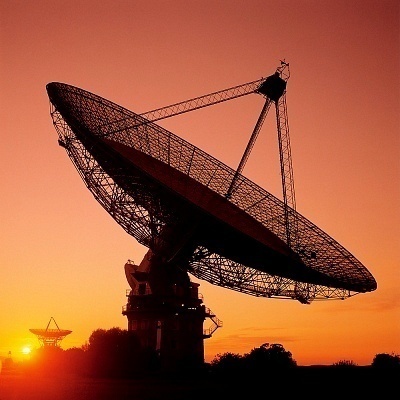
- S Band
S band is a frequency range from approximately 2 to 4 GHz. S band is used for Digital Audio Radio Satellite (DARS) satellite radio systems such as Sirius XM Satellite Radio. Sirius XM uses frequencies between 2,320.00 and 2,332.50 MHz, and also between 2,332.50 and 2,345.00 MHz. S band is also used by many weather, [...]...
- Ka Band
The Ka band uplink uses frequencies between 27.5GHz and 31Ghz and the downlink uses frequencies between 18.3 and 18.8Ghz and between 19.7 and 20.2Ghz. The Ka band is branch of the K band from the electromagnetic spectrum. The term “Ka-band” is from Kurz-above, which originates from the German phrase “kurz” implying short. Ka band dishes [...]...
- C Band
C Band is the original frequency allocation for communications satellites. C-Band uses 3.7-4.2GHz for downlink and 5.925-6.425Ghz for uplink. The lower frequencies that C Band uses perform better under adverse weather conditions than the Ku band or Ka band frequencies. C Band Variants Slight C Band frequency variations are approved for use in various parts [...]...
- Ku Band
The Ku band (Kurtz-under band) is primarily used for satellite communications, particularly for editing and broadcasting satellite television. This band is split into multiple segments broken down into geographical regions, as the ITU (International Telecommunication Union) determines. The Ku band is a portion of the electromagnetic spectrum in the microwave range of frequencies ranging from [...]...
- Business Band
Business band stands for a series of frequencies in the UHF and VHF two-way radio bands, which are exclusively reserved for businesses to communicate within limited ranges. Of course, not just anyone can use this bandwidth. Anyone that wants to use the business band must first receive a license from the Federal Communications Commission, also [...]...