Home     Blog

Rainfade

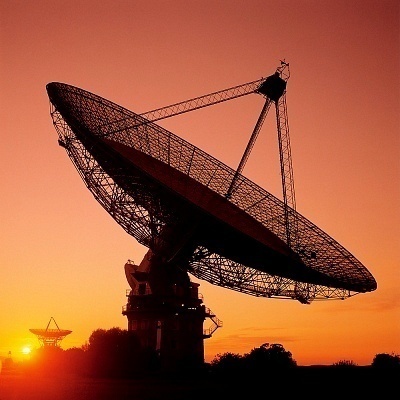
Rainfade 150x150 Rainfade

Rainfade refers to a phenomenon that occurs during strong rain or snowfall in which satellite signals are prevented from reaching their destination. Rainfade may also refer to extensive cloud cover, strong winds, or any other environmental effect that distorts a satellite broadcast, but is most often observed during rainfall. Rainfade may also refer to the slow speeds of WiFi and other wireless data transmissions during storms or other undesirable weather conditions that are caused by the same effects. Rainfade can be an irritating and troublesome effect if a satellite company does not take precautions to account for potential rainfade when broadcasting signals.


How Rainfade Works

Rainfade refers to a distortion of radio signals that is similar to the way light bends in water. Although signals are usually received eventually, rainfade can cause data transmissions to be slow, inconsistent, or distorted. Rainfade occurs because individual droplets of water and some particles in the air are able to reflect radio signals at an angle and prevent them from reaching their destination.


How To Counter Rainfade

Rainfade can be countered by a number of techniques. One way of countering rainfade is by constantly re-transmitting the same information so that a signal will eventually reach its destination. However, rainfade during these types of transmissions may still cause the signal to be distorted, inconsistent, or delayed. Another, more popular, way to combat rainfade is by increasing the uplink power of the transmitter, allowing it to overcome scattering caused by rainfade. Likewise, rainfade attenuation can be calculated by the CCIR Interpolation Formula as well as the ITU-R Frequency Scaling Formula.
VN:F [1.9.17_1161]
Rating: 0.0/10 (0 votes cast)
Follow Will.Spencer on

Comments (1)


  1. JN says:

    Another method for countering rainfade is to use an aftermarket higher gain dish than what is typically supplied to you for dbs satellites. Of course the rainfaded signal is still present the increase in gain can make loss of service much less noticeable.

    VA:F [1.9.17_1161]
    Rating: 0.0/5 (0 votes cast)

Leave a Reply

Related Posts

  • The Best Satellite Dish

    There is no “one” best satellite dish. The best satellite dish for you depends upon several factors. Satellite Dish Size The larger the satellite dish, the better it will receive signals. Therefore, the largest satellite dish available is always the best satellite dish — except that few of us want a nine foot satellite dish [...]...


  • Round Trip Time

      Round Trip Time, or RTT, also known as “round-trip delay time” is the time it takes for a signal to be sent from a transmitter to a receiver plus the time it takes to verify that the signal has been received; therefore, Round Trip Time is the time it takes for a signal to be [...]...


  • Ka Band

    The Ka band uplink uses frequencies between 27.5GHz and 31Ghz and the downlink uses frequencies between 18.3 and 18.8Ghz and between 19.7 and 20.2Ghz. The Ka band is branch of the K band from the electromagnetic spectrum. The term “Ka-band” is from Kurz-above, which originates from the German phrase “kurz” implying short. Ka band dishes [...]...


  • Baseband

    Generally, a transmission signal contains more than a single frequency. This is to say that there might be several different frequencies linked together or else superimposed on each other. This is just the way all telecommunication systems function. For example, with today's communication technology it is virtually impossible to send low frequencies without experiencing any [...]...


  • DirecTV Satellite Dishes

    DirecTV Phase I Satellite Dish The DirecTV Phase I Satellite Dish was the original DirecTV dish. This is an 18" satellite dish with one LNB. This dish can only receive signal from DirecTV satellites at 101 degrees. DirecTV Phase II Satellite Dish DirecTV introduced the Phase II Satellite Dish in 1998. The Phase II dish [...]...