

A BUC (Block Upconverter) is a device that converts radio signals from a lower frequency to a higher frequency. BUCs are used in satellite uplink transmissions in order to transfer data from a ground based unit to a satellite in orbit that will then be redirected to another ground based unit in separate location. Likewise, BUCs are used in long distance communication between two or more ground based radio towers. BUCs are often found in communication broadcast systems for television and Internet access, weather systems, and government agencies.
How a BUC Works
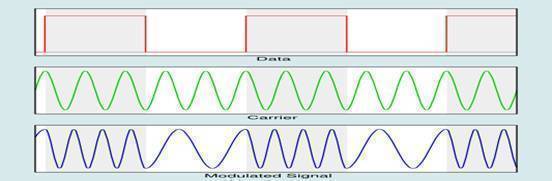
A BUC converts bands of low digital frequencies that represent data into bands of high radio frequencies that can travel much farther into space in order to reach satellites and other spacecraft that are in the Earth’s orbit. Each frequency is used as a form of Morse Code in which data is translated back and forth between radio waves and digital information. Each band represents a collection of frequencies in order to distinguish each set of data.
Band Comparisons
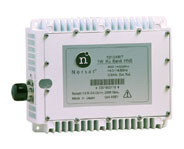 Typical BUCs convert frequencies from the L band to the Ku, Ka, and C bands. The L band refers to four separate bands of electromagnetic waves including 40 – 60 Ghz (for tracking), 1 – 2 Ghz (for communication), 1565 nm – 1625 nm (for optical applications), and 3.5 micrometers (for infrared astronomy). The Ku (K-under) and Ka (K-above) refer to the portion of microwaves directly under and above the K band respectively, which are both typically used for radar. The C-band refers to several points of microwaves in the electromagnetic spectrum that are used for long distance communication, which is the type that television and Internet broadcasting systems most commonly use.
Frequency Comparisons
An oscillator, which is a device that is capable of producing harmonics depending on how much electricity is passed through it, generates frequencies. Because oscillators can produce the same harmonics repeatedly, time can be used to derive a pattern from a frequency and translate it into data. However, because electromagnetic waves tend to fade with distance, a signal’s frequency must be repeated much faster in long distance applications in order to reach targets that are farther away. Frequencies that are repeated many times in a short amount of time are referred to as “high frequencies,” while frequencies that are repeated less times in the same amount of time are referred to as “low frequencies.” Low frequencies are still useful, but are reserved for close range communication or telemetry between two objects.
Follow Us!