

An LNBF (Low Noise Block-Down Feedhorn) Converter is a type of satellite dish that is used for satellite television and Internet access. It includes a device known as a feedhorn that is responsible for collecting radio signals reflected off of a parabolic dish. LNBFs are the most common form of LNBs and are necessary in order for subscribers to receive high speed Internet and television services via satellite.
How LNBF Works
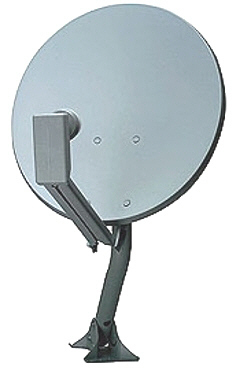
LNBFs work in the same way that all other satellite receivers work, consisting of a parabolic dish attached to an oscillator and a cable line. As a satellite in orbit sends high frequency microwaves towards the satellite receiver’s region, the subscriber’s parabolic dish collects the signals and aims them back towards the LNBF. As this happens, the LNBF’s oscillator produces a fixed signal and combines it with the incoming microwaves. The LNBF then filters the sum of the two signals and passes the difference between them through the cable line to the subscriber’s television or Internet modem.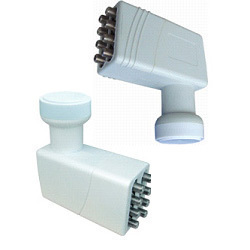
Applications
LNBFs are used for a wide variety of applications, the most popular being television and Internet access. While LNBFs are also found in cities, they are most commonly found in rural areas where cable companies are not available. In addition to television and Internet, subscribers may depend on an LNBF for their home telephone and LNBFs can also be used to receive radio signals from radio stations worldwide.
Advantages
LNBFs are advantageous because they are cost effective, the same size as other parabolic satellite dishes, and can be used to receive a much better signal than other parabolic dishes can provide. While LNBFs are still unable to receive a signal in certain situations, they provide the most reliable signal in all environments.
william
Can a king dome RV (in motion) satellite support an Free to Air receiver?
H3llas
You can try asking King Dome directly at:
http://www.kingcontrols.com/contact.asp
William
I did and they said probably not…