

More properly known as the Bayonet Neill-Concelman connector, the BNC connector is one of several radio frequency connectors on the market today. The name of the connector is derived from a combination of two things: 1) the connecting technology employed; and 2) the names of the two inventors of the device. Paul Neill of Bell Labs and Carl Concelman sought to develop a connector that would employ a bayonet mount mechanism for locking. Building on the research of Octavio M. Salati, the two men perfected an earlier design and created this small connector that has been used for a number of applications over the last several decades.
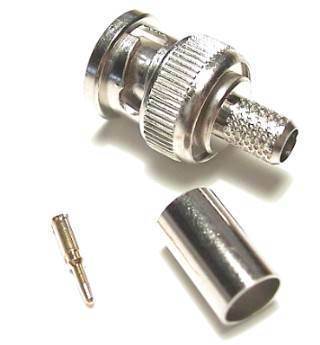
What does the BNC Connector do?
The BNC connector is configured to process both analog and serial digital interface video transmissions. The connector is also capable of handling transmissions for audio interface as well.
Sizes Available with BNC Connectors
Typically, BNC connectors are manufactured with 50 and 75 ohm impedance capability, with the 50 ohm impedance good for frequencies of up to 4 GHz and the 75 ohm impedance for up to 2 GHz.
How can a BNC Connector be Used?
Many types of electronic test equipment components are configured for the BNC connector. Aviation equipment also frequently employs the use of BNC connectors as well. A third application is with amateur radio antenna connections, making it a popular option with ham radio operators.
Early in the development of consumer-based access to the Internet, the BNC connector was used with Ethernet networks. This application has mainly fallen out of favor, since modern Ethernet network components tend to use a construction that does not include coaxial cables.
Other Names for the BNC Connector
The BNC connector is often called other names. Among them are the Baby Neill-Concelman connector, the Baby N connector, the British Naval connector, and the Bayonet Nut connector.
john k
I have an older security system that went out and i’m am replacing the dvr. The existing cameras are good and appear to have a BNC connection that attaches with a quarter turn and locks in place by little nubs. They have a white wire also that plugs in a box for power. will the connections fit any new dvr i buy?
M.L.Krupavathy
I have an imported sony 40″LEDTV.The cable plug is not fitting into the tv.what should i do now?
memenode
Have you looked for an adapter? What kind of input does your TV accept?