

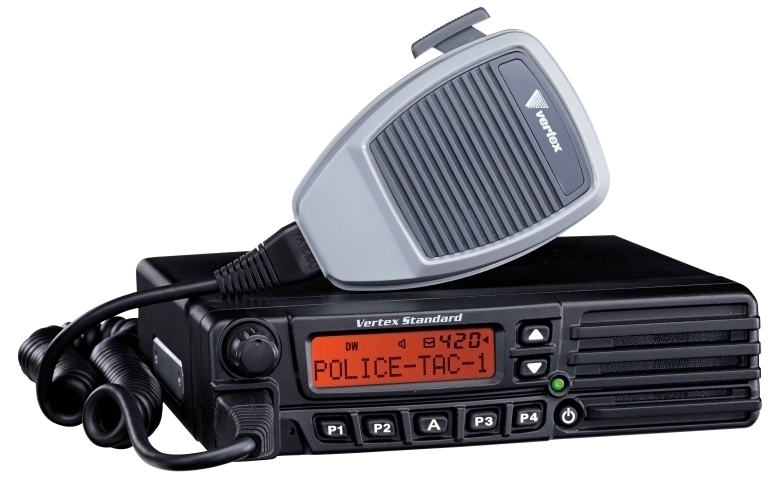
Business band stands for a series of frequencies in the UHF and VHF two-way radio bands, which are exclusively reserved for businesses to communicate within limited ranges. Of course, not just anyone can use this bandwidth. Anyone that wants to use the business band must first receive a license from the Federal Communications Commission, also known as the FCC.
There are some exceptions to this rule in the form of five frequencies, which are part of the Multi Use Radio Service, which means they are open for unlicensed use. This means that anyone with power output of two watts or less is welcome to use the frequencies.
The frequency ranges from 450-470 MHz is used mostly for UHF business, although there are other purposes for communication along this frequency. In some busy areas such as New York, the standard UHF business frequency is used for other business communications because the airwaves are simply very congested. To make the frequencies of UHF and VHF easier to understand, the frequencies are color coded as Blue Dot, Purple Dot, Red Star, and so on. White, black, orange, brown, and yellow dots represent the lower UHF bandwidths. There is also the J Dot and the K Dot that denote the higher frequencies of the UHF range, specifically 467.7625 and 467.8125.
When individuals or businesses are licensed to use the business bandwidths, individuals will be able to communicate with one another over short distances, for instance between the administrative offices and workers that are out in the field. The only problem that most businesses experience with these bandwidths is interruptions in their frequencies as other people are often on the same frequency and businesses must work together to coordinate so that they can each conduct business with minimal interruption. When businesses work together to establish the use of different frequencies, radio transmissions via business band work quite well as a means for communication.
Many businesses choose communication by radio in the business band because it's cheaper than buying all employees phones and paying for each phone call. Unfortunately, the sound quality and coverage area limits those that are able to use the business bands, especially for businesses that need privacy or certain information that is transmitted to remain confidential. The business band works quite efficiently for some, but for others it is not a replacement for cell phones.
Follow Us!