

From the wordings of the name, an LCD TV is a short form of Liquid Crystal Display Television. What is presented in an LCD TV to make it work the way we see it is founded on the special effects of substances of light and liquid crystals acting on each other. These are brought together through a technical process known as Thin Film Transistor. Keep in mind that this process has witnessed a lot of innovations over the years to bring the LCD TV to what we have today.
The LCD works virtually in a similar manner. The liquid crystals are broken down into small particles and these particles are known as pixels, which are made up of features from the liquid crystals. These crystals are usually located in the middle of two apparent electrodes and an equal number of sifts vibrating in a single direction. What the liquid crystals do is that they are there to alternate the manner in which light is vibrated to pass through a crystal, ahead of permitting it to pass through another crystal.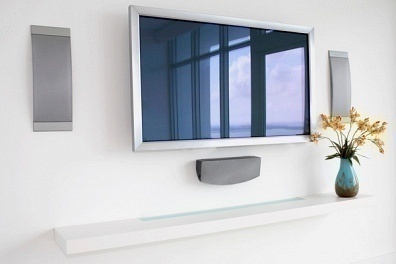
As soon as electric currents are passed through any of the apparent conductors connected to the pixels, all the liquid crystal shapes are going to ally themselves at equal distances along every section of the electrified area. This will in turn regulate the manner in which the vibration is effected and the manner in which the light rays is obstructed. Remember that these molecules will begin to revert to their normal uncoiled state when some measure of electricity is passed unto them. Also remember that the intensity at which current is passed through them determines the fastness or effectiveness that they can revert to their normal state. It should also be noted that the further they are reverted to their normal state, the further they block the path of light; and when they are totally relaxed, it becomes difficult for a ray of light to go through them. This is what is used to create the differences in intensities between light and darkness.
There is equally an intense lighting at the rear of the screen that emits light rays to the direction of the observer. At the font of this light are situated so many pixels and each of these consist of minor pixels producing the colors green, red and blue. At the front and at the back of these pixels are located vibrating glass sifts with tiny liquid crystal sandwiched between them. These sifts are capable of being turned on and off by means of an electronic transistor. The transistor is able to regulate the intensity of light getting into the tiny liquid crystal by alternating their shapes to a slant of 90 degrees. This will let some light into each of the so many sifts and they become visible light. Keep in mind that each of these clear pixels is an equivalent to one of the millions of figures that combine to form the entire picture that is obvious on the LCD screen.

Prasannakumar.s
How LCD are placed, how picxels are arranged, how LCDs are placed between electrodes/plates. I wish to have a diagramatic explanation
Prasannakumar.s
Please let me have a diagrammatic explanation of how a LCD TV works
manxman1
Diagram would be better – and explain that there are two wires per pixel – how do they control so many pixels is there a bunch of wires at the back?
Bhaskar T.V.
The explation of how LCD TV works is good .
kali
poor development!!!!!!!!!!!!!!!!!!!!!!!!!!!!!
Helo
Thanks for the information in the decision to buy a TV it is all good. Perhaps it would be useful to many. People like me.