

CCTV (Closed Circuit TV) uses one or more video cameras to transmit video and sometimes audio images to a monitor, set of monitors, or video recorder. The difference between CCTV and standard TV is that standard TV openly broadcasts signals to the public. CCTV is not openly transmitted to the public. CCTV uses either wireless or wired transmission to send the broadcast from the video cameras to the monitor(s) or recording device. Most CCTV systems are used for surveillance, which can include security monitoring, spying, or safety monitoring.
CCTV Cameras
CCTV systems have become extremely popular over the last few decades as the technology has improved and become more affordable. The majority of CCTV cameras in use today are usually for surveillance and security purposes. CCTV systems can be found in almost every bank, casino, mall, and large department store. In fact, CCTV systems have become so affordable, most smaller mom and pop stores also have CCTV systems in them for security purposes.
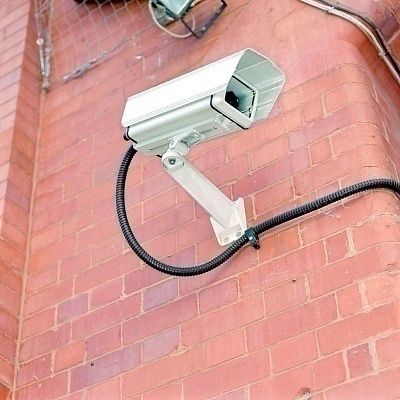
Types of CCTV Cameras
There are many types of CCTV cameras. They can be categorized by the types of images they are able to capture, the amount of frames they can take per minute, the type of connection to the monitor or video recording device, whether they are able to move position, and special functions they can provide.
Types of Images: CCTV cameras generally take both black and white or color video images. In addition, many CCTV cameras even have night vision capabilities that allow a CCTV camera to view and record low light images using special technology.
Frames per Second: Frames per second is the amount of full frames that a video camera captures and sends to a recording device or monitor per second. While most CCTV camera systems easily capture 30 or more frames per second (30 fps is considered real time), the amount of video tape or digital storage would be enormous to record every moment of everyday. For most stores, speeds of 1 to 6 frames per second are more than enough to catch and record a perpetrator committing a crime.
Pan Tilt Zoom (PTZ) Cameras: These types of CCTV cameras allow a person controlling the surveillance of an area to move the camera remotely, usually with an RF or wired controller. Most movable cameras allow the person monitoring it to move the camera from right to left (pan), up and down (tilt), and from a tight angle to a wide angle (close up zoom).
Cameras with Special Accessories: Certain CCTV cameras have special functions that are made for specialty uses. For instance, there are extremely small surveillance cameras that are used for spying (Nanny Cams), night viewing, are vandal resistant, and that are specifically made for indoor or outdoor uses.
Wired Vs. Wireless Connection
There are two main types of connections for CCTV cameras: a fixed cable or a wireless connection.
Fixed Cable Connection
Fixed cable connection means that the camera is physically connected to the monitor or recording device via a cable. Coaxial cables that are similar to normal home TV cables are usually used. Lengths come in 25, 35, 50, 100, or 500 feet. As the distance increases, signal quality decreases. For distances longer than 100 or 200 feet, purchase higher quality coaxial cables such as RG59 coaxial cable for distances up to 600 feet and for distances more than 600 feet, but less than 2,000 feet, purchase CAT5 cable.
Wireless Connection
Most wireless CCTV cameras use the 2.4 Gigahertz frequencies to transmit their video images to a monitor or DVR (digital video recorder). Usually, frequencies can be slightly changed to have more than one group of cameras in a specific space. Wireless CCTV cameras that use this frequency can easily transmit through most walls and obstacles. However, each individual location will have its own operating limits. Expect most wireless CCTV cameras to send data to a range of about 200 feet. However, many will more likely work well when transmitting less than 150 feet. A clear line of sight transmission will always work best.
Obviously a wireless connection allows greater freedom to place CCTV cameras almost anywhere. While wireless CCTV cameras transmit their video images to a digital video recorder or monitor, many of these types of cameras must be plugged into an electrical outlet. There are, however, some CCTV cameras that are battery operated.
Tape vs. Digital Video Recorders
There are two main ways to record video images that CCTV cameras capture. They are analog tape and digital video recorders. Most analog video recorders use VCR tapes or standard VCRs to record the images or special security time-lapse VCRs to record images for a longer period of time.
VCR Tape Recorder
A tape recorder such as a security-time lapse VCR can record CCTV camera images in either black and white or color for 2,4, 6, 8, all the way up to 960 hours, which is 40 complete days. The determining factor is how many frames per second users intend to record and how many cameras are hooked up to the VCR for recording. For instance, if a user records 30 frames per second (real time video), he/she will only be able to get a few hours of video captured on the recorder. If users record one frame per second or less, they can record for dozens of hours before the video tape is full. VCRs are very practical, very reliable, and extremely affordable. Expect to pay only a few hundred dollars for a security VCR.
Digital Video Recorders
There are two types of DVRs (Digital Video Recorders). They are either stand alone devices or hard drives that are connected to a computer system. DVRs work similar to VCRs, but the images they capture from the CCTV camera is digital. The amount of digital images captured on a DVR is determined by a few factors including the frames per second recorded, the amount of cameras hooked up to the DVR device, the resolution that the DVR saves the images at, and the video compression used (e.g. MPEG4). For a common set up, where 4 cameras are shooting at 30 fps and an image resolution of 320 X 240 is being used, each camera only records when motion is on, and MPEG4 compression is used, users should be able fill up a 20 to 25 GB hard drive in about 80 hours.

sh khor
Possible for Imaging programmable, before those FULL image transfer to Monitor (or Video device), means like Top View and Bottom View of Image are covered Up, the main reason is privacy does not ant to show on the Monitor. If yes, how to configure it..
TQ….Br SH Khor
Jamiep
Hi moved in to current home has camera front and back there are a load of cables in one of my bedrooms yellow black I think I just need a recorder ??? Not got a clue ??
Iliev Iliyan
can a camera jumps in time by itself and does that means that the CCTv Footage was manipulated ! It has jumped with 10 minutes and it happened only once in a very important specific moment !!
Kelly
I am no expert but it sounds to me like the video time has been manipulated.
I was going through something similar just today that’s why I know it usually means it’s been tampered with.
Also the video shouldn’t skip blocks of time, but if it’s constantly happeneing then there might be something wrong, but what you are describing sounds more like it’s been deleted deliberately. I hope that helps x
Smalls
We have requested CCTV footage for a court hearing. The owners of the CCTV system have said it’s not available as the back up disc was not formatted correctly! Is this possible?
lesane
If the light is on of a cctv camera but the display is off.if u fix display cn u rewind it to see videos
Bharat Verma
I want to install dome camera with night vision outside my
house near parking area. I have few questions in my mind before I go for the
same.
1.
Is it possible to record voice along with video
2.
Do I have to connect camera with laptop/computer
every time 24*7
3.
Will it work or record every moment even if
laptop is not connected with camera., if yes then how can I check the recorded
video and voice
nikhil
after cutting off main supply by how much time cctv can work?
nikhil
how can i lost previous footage of my cctv camera?
Ayan
CCTV cameras almost never records sound; sound recording makes the system complex and expensive….. and it adds no value in surveillance…. definitely a fake video…
barney
how does a cctv camera work whats got audio?
David
Hi, can i buy very small secret cameras which i can only watch trough a phone every where?
how and where are they…. thanks
Akinnawo Akinwale Vincent
Hello there, please I need your practical orientation on CCTV. Installation, and Analysis of the connectivity in a particular place, business or residential enviroments to see that cctv is best tools for security. Mail all feedback to akinnawowale4uall@yahoo.com. Thank you
Sonali
Hi there, I have a 4 camera setup to cover my store and it records on a hdd which, when full, wipes off and record on it again. Also,, I can watch it live anywhere in the world from my comp or smartphone. Is there a possibility of recording voice along with video as well? Sorry, am no tech guy to know how these gadgets work.
Nikhil
Yes you can record sound if the following is in place:-
1) CCTV Camera has an inbuilt mic or additional mic is attached.
2) Sound Cable is passed from Camera to DVR.
3) DVR has audio Inputs and Output.
Hope the above solves your query.
http://www.safetysolutions.in
denyze
can i still record on my dvd/ hdd if the tv is unplugged i have a security camera on it only i dont use it to record on the tv thanks for any help
Hitesh
Yes you can unplug the tv as far as you are not unplugging the DVR system,the recording should work fine.
Hitesh
I lately happen to buy a 4 viewer Net Dvr of Zicom. I am able to get a view on my Internet explorer but would also like to know if there is any way I can view the same on my phone? I am using an iPhone 4G.
Any help would be highly appreciated.
Thanks.
Sara
I think you should ask the DVR supplier whether their DVR support iphone, if it support, there may have a mobile software, you can download the software into your phone, then use the DVR ip address, you can see via your phone. Hope it healful for you.
Sara
Shenzhen Giakos Techonology Co. LTd.
http://www.giakos.com/en
Nikhil
You may ask your DVR Supplier for the Software. As far as I know mobile software for I fone 4 is not yet out so you might have to wait. Another option is that you may change your DVR if that is possible so that you can view your cameras through the phone browser. Everfocus is one Brand that supports live view through the Phone Browser.
Hope the above solves your Query.
safetysolutions.in
james
I have 4 wireless ctv cameras is there any way i can use my pc to send pics tp hard drive 2.4 ghz caameras
chris
dear all any one who can help me on how to intall cctv cameras and electrical fencing please provide me with manuals
RUTHANNE
I HAVE THE CLOVER DVR CAMERA SYSTEM. MY EX IS ENTERING MY HOME WITHOUT BEING SEEN ON CAMERA. I WAS TOLD BY A RELIABLE SOURCE THAT HE IS USING A RF JAMMER ON MY CAMERA SYSTEM AAND ALARM SYSTEM. IS THIS POSSIBLE? IF I GOT CCTV CAMERAS WOULD HE STILL BE ABLE TO USE THE RF JAMMER.
alankar
sir what is the meaning of cif 4 cif &D1
U S W Jayakody
I have to design a cctv camera system.But from camera to monitoring station distence more than 600 mtr. Kindly give me some ideas about that and brief me what cale,camara, & equioments should I use . There are 6 Camera and 2 ptz camera (for air craft Hannger)
sundar
sir , i want tranfer 16 cmaera’s from one building to my ofiice in about 2500 feet away , how to use cable andwhich cable is suitable – ?
Sankar
Hi Sir,
In security automation systems(SAMS) how the IP Camera,Smart card reader,video surveilliance transmitter,cctv systems could be connected to the network video recorder(NVR) and what are the components to be intrgrated for this SAMS functions.Could be explain in briefly with functional diagram and their protocols used on it.
liz
hi there just over a year ago ‘typical’ i have bought a 4 channel H.264 digital video recorder and it stopped working there is power going in because the little fan inside works but nothing else does cant get anything on screen . what i would like to know is do i have to buy a new recorder or can i just shop around for a new hard drive(any hard drive)or how does the working system gets onto it. the shop i bought it from sells the hdd for 110 pounds that seems a lot to me
sajjad muhammad
sir i want to know that how much types of cctv security system are there.
Narayanan
I am lookiing for TVS make Out door PTZ camera.Please me teh details, if possible
Presley
What kind of connection is used for public cctv connetions more than 10km apart from the dvr or monitoring room.
saurabh
Please suggest the proper cable used for CCTV or security camera used for a bunglow (residence).
Sanyal
As per my observation, it is better to use cat5e UTP cable with Balun kit (UTP to BNC converter) on both end for cctv connectivity to be used in bunglow or residence. Through cat5e cable both video & power will be transmitted which will be converted from BNC to UTP (camera end) & UTP to BNC (DVR end). By this solution we can save the cost of extra cable ( as cat5e cable is transmitting both video & power) and no separate power outlet is required for cameras.
Nasser
What is SVFT stands for in cctv?
ben.stewart
its either your connections or your DVR. depending on the system but most systems if a fuse goes it all shuts down to save damaging the system so it seems unlikely its the fuse
phil r
3 cameras are not giving pictures 1 camera is could this be down to fuses in 12volt supply ?
Patrick
Can anyone share with me what is the different between pictures per second (pps) and frames per second (fps). How to convert pps into fps? Thanks in advance.
Jacob
pps will probably mean the amount of single pics taken per second but not compiled into a movie
fps
pics taken per second and compiled into a movie hence “mov” in movie
to convert pps into fps the only thing i coild recommend is “pivot” which is impractical so if you search into the internet you could find something
Madhan
Please priscribe a best DVR cable for connection
Mohanrao YK
Sir, I have ZICOM DVR with 4 cameras with 1TB Hard Disc. Is there any facility to cut and remove certain portion of recorded video clippings from the hard disc.(eg. 08.00 to 08.30 hrs) on any particular day in particular camera. If so how to cut and remove this portion without disturbing the other recordings.
I am using Zicom product.
with regards,
Mohanrao.
Will.Spencer
If you have the DVR set up for constant recording, timestamps on the video will make it obvious to see that the video has been edited. If you have the DVR set up for motion-activated recording, then there is no reliable way to tell if one segment of video has been removed from the hard drive.
shail
What is better way to delete some portion on constant recordin mode????
Emily Perez
Too bad… Why do you need to edit???? hmmmm…..
eurietot
very informative. will surely help me with my research paper. thanks.
SYED SHAKIL ANWER
Thanks