

Screen resolution can be defined as the amount of information shown on a screen. Usually the more information on a screen, whether it is digital pixels or analog lines will cause an increase in the quality of the image. The higher the screen resolution will usually mean the better the picture quality.
When talking about screen resolution, most people tend to be talking about either analog screen resolution found on most standard TV’s or digital screen resolution found on newer computer monitors and HDTV sets.
Analog Screen Resolution
Two common items that you will find analog screen resolution on are the standard TV set and CRT computer monitors. CRT stands for cathode ray tube, the same technology that is found in standard TV sets. Analog screen resolution is usually the same throughout all TV sets. All standard TV sets will view an image at 480i, meaning 480 rows of horizontal lines interlaced; interlaced means that half of an image is refreshed at a time. On standard TV’s the refresh rate is half an image 30 times per second, meaning that a full image is only refreshed 15 times per second.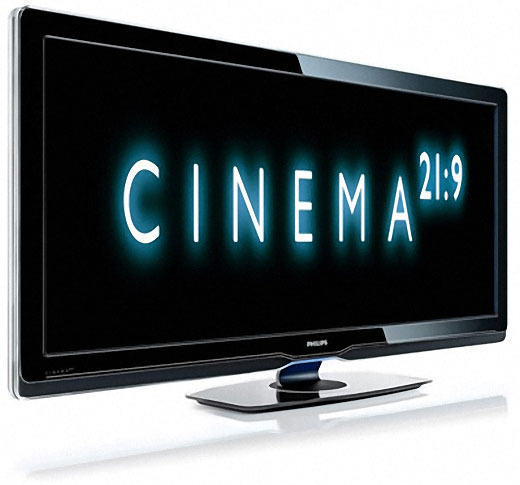
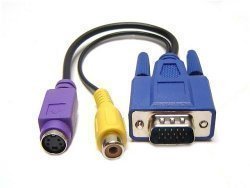
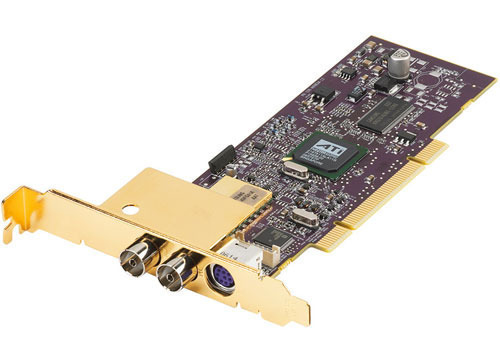
Analog Computer monitor screen resolutions are measured differently. Since analog computer monitors are refreshed from the video card of the computer and not a broadcast signal, you will usually get better screen resolutions. Two of the most common standards for analog screen resolution are SVGA and XGA. Computer monitors are measured a little differently from standard TV sets. Computer monitors are measured by both horizontal and vertical lines. Once you know the amount of horizontal and vertical lines, you can also measure an analog screens resolution by the amount of pixels. Pixels are tiny points of data which create lines of resolution. Although the computer creates these pixels which are digital, they are able to be viewed on an analog screen.
For instance SVGA analog screen resolution is defined as having 800 horizontal rows by 600 vertical rows usually written as 800 X 600. If you multiply horizontal rows by vertical rows, you will get the total amount of pixels which is 480K. XGA analog screen resolution is 1024 X 768 with a pixel total of over 786K. It is important to note that monitors no longer interlace their images, meaning that the complete image on computer analog monitors are refreshed 30 times a second.
Digital Screen Resolution
When referring to newer digital monitors that usually come in the form of LCD displays, it is important to note that these screens are measured similar to analog computer monitors.
Digital monitors such as small flat panel LCD monitors come in usually XGA, SXGA and other formats. These monitors usually have resolution rates of either 1024 X 768 or 1280 X 800. While digital computer monitors can handle the enhanced resolution, it is up to the end user to choose the settings. Many people choose a SVGA setting of only 800 X 600 resolutions.
Digital TV sets such as HDTV sets have increased screen resolution. Because HDTV sets can handle more lines per screens, their image quality is dramatically increased. Most HDTV sets can play standard TV signals at 480i, but can also reproduce images at a much higher resolution of 780p or 1080p. The letter “i” represents interlaced, meaning that only half the lines that make up the image are refreshed 30 times per second. The letter p stands for progressive. This means that the screen is non-interlaced or that the whole frame or image is refreshed 30 times per second. 780p and 1080p stand for the amount of lines that run across a screen.
Craig Aarseth
Statement from this page:
“On standard TV’s the refresh rate is half an image 30 times per second, meaning that a full image is only refreshed 15 times per second.”
Standard TV video consists for two fields which when combined makes a frame, a complete image. One field contains odd numbered lines from a “frame”, and the second “field” contains the even numbered lines. It is called interlaced video for this reason. The field rate is 60 Hz. and the frame rate is 30 Hz. Not 30 Hz & 15 Hz
Jesse Roscoe
Am I missing something? I just stumbled upon this article that keeps mentioning a refresh rate of 30 times per second. Are you referring to frame rate? A “refresh rate” of 30 times per second (30 Hz) would not be seen on most devices and would cause flickering and eye strain with a CRT.
Anthony Mills
This had nothing to do with what i needed to find. which was, if the XGA had a resolution of 1024×768 pixels, how mony colors could it display?