Home     Blog

Data Link Layer

The Data Link Layer is layer two of the OSI model. It resides above the Physical Layer and below the Network Layer. The Data Link Layer is responsible for communications between adjacent network nodes. Hubs and switches operate at the Data Link Layer. The Data Link Layer is logically divided into two sub-layers: The Media Access Control (MAC) Sub-layer and the Logical Link Control (LLC) Sub-layer.

Media Access Control Sub-layer

The MAC Sub-layer is responsible for addressing on the Local Area Network.
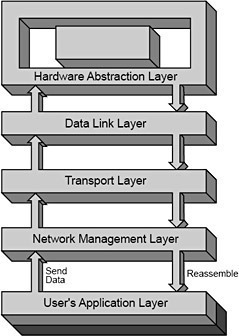
Datalink Data Link Layer

It also determines when nodes on a Local Area Network are allowed to transmit. In Ethernet, this is accomplished with the CSMA/CD protocol.

Logical Link Sub-layer

The LLC Sub-layer is responsible for synchronizing frames, error checking, and flow control.

Data Link Layer Standards

Standards that operate at the Data Link Layer include: Ethernet, Wi-Fi, Frame Relay, ATM, and PPP.
VN:F [1.9.17_1161]
Rating: 10.0/10 (1 vote cast)
Data Link Layer, 10.0 out of 10 based on 1 rating
Follow Will.Spencer on

Comments (1)


  1. Anantha Lakshmi. N says:

    Whwt are the advancements in Data Link Layer?

    VA:F [1.9.17_1161]
    Rating: 0.0/5 (0 votes cast)

Leave a Reply

Related Posts

  • Physical Layer

    The Physical Layer is the lowest layer in the OSI (Open Systems Interconnection) Model of computer networking and is used to transfer electrical signals that represent data from one place to another. While the Physical Layer does not represent data itself, it does provide a means for that data to move. Essentially, the Physical Layer [...]...


  • Network Layer

    The Network Layer is located at the 3rd position in the seven layer OSI model. It offers serviceable and practical ways of transmitting variable length data series from a source to a destination through one or more networks, while preserving the class of service and error handling tasks. The Network Layer is accountable for source [...]...


  • Session Layer

    The Session Layer is Layer 5 of the OSI (Open Systems Interconnection) Model of computer networking. The Session Layer is directly after the Transport Layer and before the Presentation Layer, allowing it to interact with applications as well as network components. The Session Layer is responsible for opening, maintaining, and closing all sessions between multiple [...]...


  • Transport Layer

    The transport layer is the fourth layer of the OSI Model and exists between the Session Layer and Network Layer. The transport layer is used to actually transfer data from one application to another and can be used to stream data from one device to another. The most popular transport layer, the Transmission Control Protocol, [...]...


  • Understanding the Cisco Three-Layer Hierarchical Model

    Understanding the Cisco Three-Layer Hierarchical Model Hierachical network design helps us to make networks more reliable and predictable. Level by level design help to understand networking factions easily like, we can use tools like access lists at specific level and can avoid them from others. Cisco layer model consist of the following three layers. The [...]...