

The Network Layer is located at the 3rd position in the seven layer OSI model. It offers serviceable and practical ways of transmitting variable length data series from a source to a destination through one or more networks, while preserving the class of service and error handling tasks.
The Network Layer is accountable for source to destination packet deliverance and routing through intermediate networks. On the other hand, the Data Link Layer is in charge of node-to-node frame deliverance on a similar channel. The Network Layer executes network routing tasks and may also carry out fragmentation and reassembly, and report deliverance errors. Routers work at the Network Layer, distributing information throughout the entire network.
Network Layer Functions
- Path Determination/Routing: The Network Layer manages arriving packets from different sources, decides their finishing destination, and then makes a decision regarding where to send the packets to make them reach the final destination.
- Logical Addressing: Each and every component participating in a network communication has a logical address commonly known as the layer-3 address. Addressing is also carried out at the data link layer, but it refers to local physical components. Logical addresses are not dependent on specific hardware and must be distinct across a complete network.
- Forwarding: In the process of routing the packets to their final destination, the Network Layer needs to keep forwarding the packets to concerned intermediate nodes.
- Datagram Encapsulation: The Network Layer encapsulates the various messages received from upper layer into Packets (also known as Datagram) attached with a header.
- Fragmentation and Reassembly: The Network Layer usually breaks up the packets into smaller messages to be transferred to the Data Link Layer and reconnects them to reform the packet.
- Error Handling and Diagnostics: The Network Layer also handles various communication errors, routing flaws, and status exchanges.
Network Layer Standards
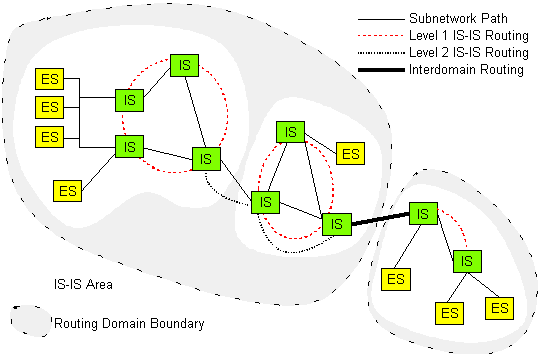
Standards that operate at the Network Layer include: IP and ICMP.


kunal raval
Why network layer doesn’t perform error check?
sheldon banda
How does the network layer relate to the other layers in the model.
Describe the two main functions of the presentation layer of the osi model.
rahim
what devices fall in each of OSI model?
Aditya
Precise information and easy to understand.