Presentation Layer
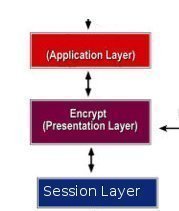
The presentation layer is one of seven layers of the OSI (Open Systems Interconnections) Model and is found between the application layer and the session layer. The presentation layer is commonly used for encryption and decryption as well as the conversion of file formats. The presentation layer is considered the last layer in which data structure and presentation can be modified before the network handles nothing more than data packets.
How A Presentation Layer Works
The presentation layer works by converting information into a wide variety of file formats and forms of encryption. The presentation layer does this by using built-in algorithms and is able to standardize information whether it is handled by XML, C++, or TLV. In addition to passing information from the application layer to the session layer, the presentation layer is also responsible for passing information from the session layer to the application layer.
The presentation layer is used for a number of applications. For example, HTTP, a protocol that is used in virtually all web browsers and is actually a protocol of the application layer, uses the presentation layer in order to display data in a variety of different languages and formats, allowing the same information to be displayed on numerous platforms and devices.
Advantages
The presentation layer is advantageous because it is able to handle all data conversions for an application before the information is sent to the session layer. Because the session layer does not modify the actual data that it receives, it is important that the presentation layer converts data into the appropriate format and encrypts it for privacy and authentication.
- Application Layer
The application layer of a software is a protocol that is used for communication between a software and the network layers that it uses. The application layer allows a computer’s network to interpret requests made by the program and allows the program to interpret data from the network. Likewise, the application layer ensures that both [...]...
- Session Layer
The Session Layer is Layer 5 of the OSI (Open Systems Interconnection) Model of computer networking. The Session Layer is directly after the Transport Layer and before the Presentation Layer, allowing it to interact with applications as well as network components. The Session Layer is responsible for opening, maintaining, and closing all sessions between multiple [...]...
- Transport Layer
The transport layer is the fourth layer of the OSI Model and exists between the Session Layer and Network Layer. The transport layer is used to actually transfer data from one application to another and can be used to stream data from one device to another. The most popular transport layer, the Transmission Control Protocol, [...]...
- Data Link Layer
The Data Link Layer is layer two of the OSI model. It resides above the Physical Layer and below the Network Layer. The Data Link Layer is responsible for communications between adjacent network nodes. Hubs and switches operate at the Data Link Layer. The Data Link Layer is logically divided into two sub-layers: The Media [...]...
- Physical Layer
The Physical Layer is the lowest layer in the OSI (Open Systems Interconnection) Model of computer networking and is used to transfer electrical signals that represent data from one place to another. While the Physical Layer does not represent data itself, it does provide a means for that data to move. Essentially, the Physical Layer [...]...