What is the Data Link Layer?
The Data Link Layer is layer two of the OSI model.
The Data Link Layer resides above the Physical Layer and below the Network Layer.
The Data Link Layer is responsible for communications between adjacent network nodes. Hubs and switches operate at the Data Link Layer.
The Data Link Layer is logically divided into two sub-layers, The Media Access Control (MAC) Sub-layer and the Logical Link Control (LLC) Sub-layer.
Media Access Control Sub-layer
The MAC Sub-layer is responsible for addressing on the Local Area Network.
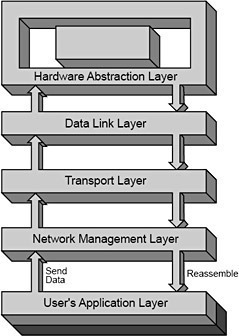
The MAC Sub-layer is also responsible for determining when nodes on a Local Area Network are allowed to transmit. In Ethernet, this is accomplished using the CSMA/CD protocol.
Logical Link Sub-layer
The LLC Sub-layer is responsible for synchronizing frames, error checking, and flow control.
Data Link Layer Standards
Standards which operate at the Data Link Layer include: Ethernet, Wi-Fi, Frame Relay, ATM, and PPP.
Books on the Data Link Layer
![]() Data Link Protocols | The only reference and tutorial on the market covering all the major data link protocols in use in industry. (Data link protocols (DLPs) manage the flow of data across a communications path and ensure that this traffic arrives error-free at the receiving machine.) Examines relative merit and pros/cons of each. Covers both synchronous and asynchronous protocols as well as WAN and LAN links. Protocols covered include: LAPD, LAPB, LEEE LAN Link Protocols, LAPM, Frame Relay, Internet Link Protocols, SDLC as well as wireless link protocols. The value of these protocols for their underlying network technologies is examined; for example the relationship of LAPD to ISDN nets or LAPB to X.25 nets. For programmers, engineers, project managers responsible for designing, installing, and maintaining communication systems using data link protocols. |
Books on the OSI Model

OSI Reference Model Pocket Guide
The pocket-sized reference provides the help you need to effectively prepare for the OSI related questions you'll encounter on Cisco's CCNA certification exam. It also serves as a practical tutorial explaining the confusing layered architecture of modern network design. The Open Systems Interconnection (OSI) Reference Model is the basis for much of modern networking. It is a layered model under which all networking protocols and services are defined. Many attempts at explaining OSI become too abstract and require a very high level of network design knowledge and experience to even begin to understand. This pocket guide presents a more practical, user-friendly examination of the topic. The author, Howard Berkowitz, CCSI, is an accomplished network designer and instructor who has written two books on network architecture. He effectively utilizes real-life experiences, analogies, and humor to clear up some of the most common confusions and misconceptions associated with the OSI Reference. Sample questions (with correct answers and complete explanations), similar to those found on Cisco's certification exams are included in this reference. These questions (with correct answers and complete explanations) allow readers to test their OSI knowledge level before attempting the actual tests.

OSI Reference Model for Telecommunications
The OSI (Open System Interconnection) Reference Model is a cornerstone of modern network design. Although the OSI model has become almost synonymous with data communications, it serves the public switched telephone network (PSTN) as well and is a productive way to organize and teach the building blocks of telecom systems. In OSI Reference Model for Telecommunications, hands-on expert Debbra Wetteroth provides telecom staffers the information they need to gain a working knowledge of this essential telecom service architecture and equipment. Her style that breaks down the barriers between data and voice vocabularies. This quick reference to the OSI model puts the data you need everyday at your fingertips.

OSI: A Model for Computer Communications Standards
Bookmark What is the Data Link Layer?