

Each GSM and UMTS mobile phone has a unique IMEI (International Mobile Equipment Identity) number. An IMEI number facilitates an important function – it easily identifies a mobile phone being used on a GSM (Global System for Mobile Communications) network. The IMEI is a useful tool to stop a stolen phone from accessing a network being used. Mobile phone owners whose phones have been stolen can contact their mobile network provider and ask them to ban or shut off a phone using its IMEI number. With an IMEI number, the phone can be banned from the network quickly and easily. It is important to note that swapping a SIM card will not stop a phone from being banned.
An IMEI device is only used to identify the device and does not usually relate to a specific individual or organization. Other numbers such as ESN (Electronic Serial Numbers) and MEID (Mobile Equipment Identifiers) can link an individual to a phone. Usually, an IMSI number stored on a SIM card can identify the subscriber on a network.
There are a few ways in which a mobile phone’s IMEI number can be located, it can usually be found on the handset, beneath the battery, sometimes printed on a small white label. Another way to easily locate an IMEI phone is to dial the following sequence of numbers into the handset: *#06#. A Sony Ericsson mobile phone user can retrieve the IMEI by pressing the following key sequence: right,*, left, left,*, left, *, left.
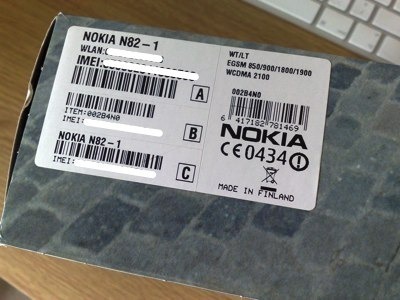
The Structure of an IMEI Number
IMEI numbers either come in a 15 or 17 digit sequence of numbers. These numbers can identify a handset. Currently, the IMEI’s format is AA-BBBBBB-CCCCCC-D.
- These two digits are for the Reporting Body Identifier, indicating the GSMA approved group that allocated the TAC (Type Allocation Code).
- BBBBBB – The Remainder of the TAC
- CCCCCC – Serial Sequence of the Model
- D- Luhn Check Digit of the entire model or 0 (This is an algorithm that validates the ID number)
Central Equipment Identity Register (CEIR)
If a mobile handset is lost or stolen, the device’s owner/operator can contact the CEIR, which will blacklist the device in all currently operating switches. This makes the lost or stolen handset unusable. Blacklisting stolen mobile handsets is seen as a deterrent to crime. However, it is possible to change an IMEI with special tools and there are certain mobile networks that do not automatically blacklist handsets registered with the CEIR. Current statistics state that about 10% of current IMEIs in use today are not unique or have been reprogrammed (hacked).
CEIR Handset Classifications
ColorMeaning
White Valid Mobile Station Grey Mobile Station to be tracked Black Barred Mobile Station
Portions of this FAQ answer are taken from What is an IMEI?, part of the GSM Security FAQ.


Randhir bungerwa
My Vivo y 53 black colour lost IMEI no 865574030909335 hai
samsung GALAXYSIII GT-19300 16
khosroasemani
samy
CAN YOU EMAIL ME UNLOCK CODE FOR SAMSUNG S8500 FROM BELL MOBILITY
IMEI 35395004032345202
MONTREAL CANADA
skessous@msn.com
yako
http://www.imei.info site gives you an opportunity to identify the phone model based on the IMEI number, this is probably the largest database of TAC which is publicly available …
dacha
imei:
357032040149926
HTC Wildfire A3333
tnx !
Mulugeta M.
my phone is alerady stolen.
the IMEI no. 359808017139406.please send it to CEIR,to block it(to make useless)
viktor
my cellphone has been stolen, pls help and if u can locate it
IMEI : 351544032441752
ALCATEL OT 800
ashok
can you please locate my cell phone
Name: Ashok Mahendrakar
Address: Krishi Vigyan Kendra, Hagari, Dist: Bellary, KARNATAKA
Phone model:Samsung B3410
Make:Samsung
Last used No.:+91 8123874468
E-mail :ashok.ashokblg@gmail.com
Missed date:29-06-2011
IMEI No.:356028041736985
Thanking you in advance.
ASHOK
09481437531
Krupal
if you can help me, I want unlock code for
IMEI: 359428.03.040285.3
PIN: 21954455
Manish Roushan
I lost my cell having imei no 352699047696110 plz tell me how can i find?????????My alt.no is 09310455759
Elshinette
I lost my phone and reported it but the police keeps on telling me that they can find the guy that has the phone.
My IMEI munber: 358027035482976
Please help