

A Chebyshev filter can either be analog or digital, and is an improvement on the Butterworth filter as it has a steeper roll-off and a greater passband and stopband ripple. These filters minimize overall error between actual and idealized filter characteristics for the designed range of the filter. The filter was named after Pafnuty Chebyshev, who developed the polynomials that the filter design was created from. Since there is a passband ripple in Chebyshev filters, they are not the best for all applications. Their primary purpose is to separate a single band of frequencies from another. The Chebyshev filter’s most desirable attribute is its speed. Compared to other filter types, the Chebyshev error is minimized over the passband. Like the Butterworth filter, the Chebyshev filter’s overall circuit architecture is simplified when it is used in designs. The Chebyshev filter is used in bandpass filters, which are components of audio crossover digital filters.
What Does an Audio Crossover Filter Do?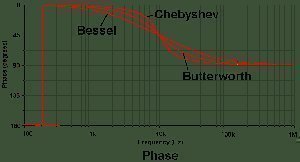
Audio crossovers are used as electronic filters in most audio or stereo equipment used today. Since the speaker drivers in these systems cannot cover the full audio spectrum, there are a number of drivers used in each stereo system. Therefore, the incoming audio signal has to be split into different frequency bands that the system needs in order to provide the best quality audio. Audio crossovers allow the crossover filter to conduct multi-band processing and amplification. They accomplish this task by splitting the signal into one or more adjusted audio bands that the stereo uses.
How Does an Audio Crossover Work?
The audio crossover’s primary task is to split a single signal into two or more audio bands that are kept apart from each other in order to avoid interference. Chebyshev filters can be used as first and sometimes third order filters in audio crossover filters. They can be found in both digital and analog systems and can be used for other industry purposes.
Follow Us!