

The term wire gauge refers to a measurement of what the diameter of a wire is. This measure can then be used to determine what the electrical resistance, weight per unit of length, and the amount of current that can safely be carried by the wire. There are two internationally accepted measures for wire gauge, the Metric Wire Gauge (MWG) and American Wire Gauge (AWG) standards.
American Wire Gauge (AWG)
The standardized gauge system used for wire measurement in the United States and Canada is the AWG, or American Wire Gauge standard. The standard was first adopted in 1857 as an extension of the previously used Brown and Sharpe wire gauge standard. This was done in order to provide a common means of producing and using common dimensions for the diameter of solid, round, non-ferrous wire in construction.
The AWG standard uses the following formula to determine the diameter of a wire: D(AWG)=.005·92((36-AWG)/39). As the wire’s size decreases by a multiple of six, the wire’s diameter decreases by a factor of two. For every three decreases in wire size, the area of the wire (cross-sectional) decreases by a factor of two.
Metric Wire Gauge (MWG)
The metric gauge standard uses a factor of ten multiplied by the gauge number to determine the wire gauge diameter in millimeters. For example, a 40 gauge wire would be 4 mm in diameter. As the diameter of the wire increases in the metric standard, the gauge will also increase. This is opposite to the AWG standard, which uses a smaller gauge to indicate a larger diameter wire.
How to Measure Wire Gauge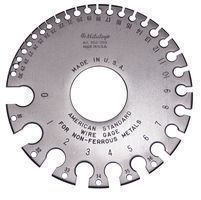
Step 1 – Note whether the wire gauge measurement tool supports American Wire Gauge (AWG) or Metric Wire Gauge (MWG).
Step 2 – Clip the end of the wire to be measured, then slice the circumference of the covering to expose the wire.
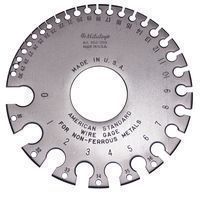
Step 3 – Insert the exposed wire into a hole on the wire gauge measurement tool that snugly fits the wire. Be sure not to insert one of the wire strands into a measurement hole that is too small as it may get bent.
Step 4 – Read the measurement on the external side of the hole on the tool to get the wire gauge measurement for the wire.
Why Does Wire Gauge Matter?
Wire gauge can be used for a number of purposes including but not limited to: carrying or transporting electrical current, connect stereo speakers to a main stereo unit, and to provide grounding wires for equipment. If the incorrect wire gauge is used, it can result in the wire overheating or melting and ultimately result in an electrical fire. As a result, building codes in all developed and many developing nations require external authorities or inspectors to verify the correct gauge of wire is used for new construction or remodeling work on structures.
How is Wire Gauge Used in U.S. Building Construction?
The minimum safety standard for wire gauge in the United States for lighting circuits is #14 gauge wire. Quality electricians, however, will choose to use #12 gauge wire when they are given the liberty to choose the gauge to install in a new or remodeled home. By using a thicker wire gauge, there is overall less resistance to the electric current and less heat loss experienced. As a result, the structure will experience a steadier power source and minimal light flicker. Another advantage to the thicker wire gauge is that 20-amp fuses may be used while the normal lighting fuses are rated at 15-amps.
How Does Wire Gauge Impact Circuit Breaker Panels?
By knowing about wire gauge and understanding its use, it can have secondary effects on the structural circuit breaker installed for the home or business. By installing greater than required wire gauge, excessive heat build-up will be minimized, and will preclude fuses being tripped off. Since thicker wire gauge can transport greater amount of electricity, heat build-up is precluded as is done with thinner wire gauges and fusing problems are prevented. Using the minimum required wire gauge can result in fire hazards resulting and longer-term consequences for the home.
How to Use Wire Gauges with Speaker Wire?
Many consumers, however, don’t need to worry about the wire gauge installed in their home or structure if moving into an already developed house or apartment. A common use, however, is trying to determine what type of wire gauge to use for stereo or television speaker wire. For entertainment centers, a common wire gauge used is the #12 AWG rating with some stereo users preferring to use the #10 AWG wire for the bass or subwoofer speakers.


Follow Us!