

A battery isolator is used to prevent primary battery systems from being drained and are mostly used in car stereo systems. These devices cause a secondary/auxiliary battery to be drained instead of the vehicle’s primary battery. This is so whether the stereo is used when the engine is turned off or if an after-market stereo system has been installed that requires more power than the stock vehicle battery can provide.
Types of Battery Isolators
There are two types of battery isolators: solenoid (relay) and diode.
Diode Battery Isolators
The diode battery isolator combines two high current diodes in a heat sink. It is maintenance free and long lasting. However, many diode-based isolators experience voltage loss, which results in them being unable to charge to as high a voltage as when they are connected to a vehicle alternator. Advanced diode battery isolators also include an extra terminal that is used to control current flow through the isolator.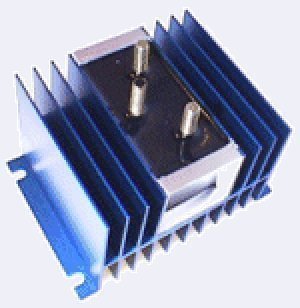
Solenoid Battery Isolators
Solenoid battery isolators use large, high current relays to control electric current flow through the isolator. This type of battery isolator does not experience any voltage loss. However, it is not as reliable as the diode battery isolator and may require frequent replacement.
Can a Second Battery be Added Without an Isolator?
Depending on a car’s design or the second battery’s location in the car, a battery isolator may not need to be installed in a vehicle’s electrical system in order for a second battery to be installed. Many consumers successfully install a second battery in their car if it is close to the stereo amplifiers. If the battery is inside the car’s passenger compartment, it should be a sealed battery. If it is installed in the trunk, a standard battery that is installed in a battery box and has ventilation routed to the area can be used. Standard lead acid batteries create flammable gases, so an unventilated area is an additional explosion hazard. The second battery should also be fused in order to prevent an electrical fire in the vehicle due to over-voltage. Two common mistakes that consumers make when installing a second battery without an isolator are 1) failing to ground the battery properly and 2) allowing objects to come into contact with the battery’s terminals.
Follow Us!