

A ground loop isolator prevents interference in a ground loop circuit. A ground loop circuit is one in which two or more circuits are connected to the same ground wire. Ideally, all circuits in a ground loop circuit have the same voltage potential. However, if the ground wire has significant resistance and current, the voltage of the second circuit will be slightly lower than the first, causing a voltage difference that makes the ground wire no longer have a ground potential. This is known as interference and can be hazardous, inefficient, and a nuisance in many electrical systems.
How Ground Loop Isolators Work
Ground loop isolators prevent interference in electrical ground loop circuits by using a small transformer that steps voltages from each circuit in a ground loop up or down, depending on whether the voltage difference is positive or negative. Ground loop isolators have a 1:1 ratio, meaning that they produce an output that is equal to their input. This allows the ground loop isolator to block any voltage spikes that may interfere with the circuit’s electrical signals.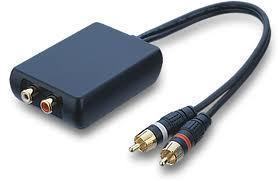
Applications
Ground loop isolators are used in a variety of electrical systems, especially in audio/video devices. Most speaker systems use a ground loop circuit to connect two or more speakers together and the voltage difference between them is often responsible for an audible hum heard over the audio. This hum can also be heard in car stereo systems, in which the hum’s frequency depends on the engine’s RPMs. Interference can be much more critical than this, however, such as in the case of transformers and other electrical supply systems that use a ground loop to prevent users from being shocked. Ground loop isolators are also used in antenna systems and routers that use more than one antenna to prevent radio interference from the device itself.
Advantages
Ground loop isolators prevent unwanted noise in audio/video systems as well as the hum that a car alternator creates. They also prevent hazardous interaction between users and high-voltage electrical systems that are meant to be safe. Ground loop isolators are extremely cheap and can mean the difference between a high quality electrical circuit and a poor one.

absar
gud lecture on this i like thz…………….<3