

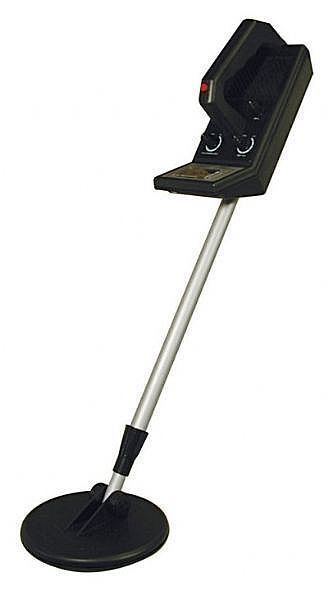
A metal detector uses an electromagnetic field to detect the presence of a concealed metal object. The range depends on the strength of the field, and is usually less than one meter from the search head. The three detection methods are beat frequency oscillation, very low frequency, and pulse induction. Metal detectors were first introduced around 1930 and are used in many different applications.
How Metal Detectors Work
The beat frequency oscillation method uses two coils connected to an oscillator. When the search head coil passes over a metal object, it's electromagnetic field generates eddy currents in the object which creates another field. This field interferes with the search head signal to change it's frequency slightly. This change is mixed with the oscillator signal to create a beat frequency that is played by the speaker. This type of metal detector is the simplest and cheapest but also the least sensitive.
The very low frequency method uses an outer transmitter coil and an inner receiver coil. The transmitter coil produces an electromagnetic field which induced eddy currents in a metal object, and creates another field which is pickup by the receiver coil. The receiver coil is balanced so that it does not pick up any field from the transmitter coil.
The pulse induction method uses a single coil to transmit and receive the electromagnetic field. Current pulses create short bursts of electromagnetism that induce current in the coil when the field collapses. The presence of metal in the field will slightly change the amount of current produced. This change is detected by the circuitry and converted into a tone.
Metal Detector Applications
Metal detectors are used at security checkpoints to detect metallic weapons, but they cannot detect weapons made of plastic or ceramic. They are used to find gold and coins in the ground, and can also find land mines. A stud finder is a basic metal detector that is used to find concealed studs, pipes, and wires.

Follow Us!